
CIRCUIT OF THE NORTH SEA
40 hours, 30 minutes
1,285 air miles
Following N.S.11’s move to the airship station at East Fortune in Scotland, Warneford set out on another endurance flight on 16 March 1919 which ended up, by the morning of 18 March, being the longest non-stop flight entirely over sea of any British aircraft, and as far as is known, the world’s longest record for a non-rigid airship.
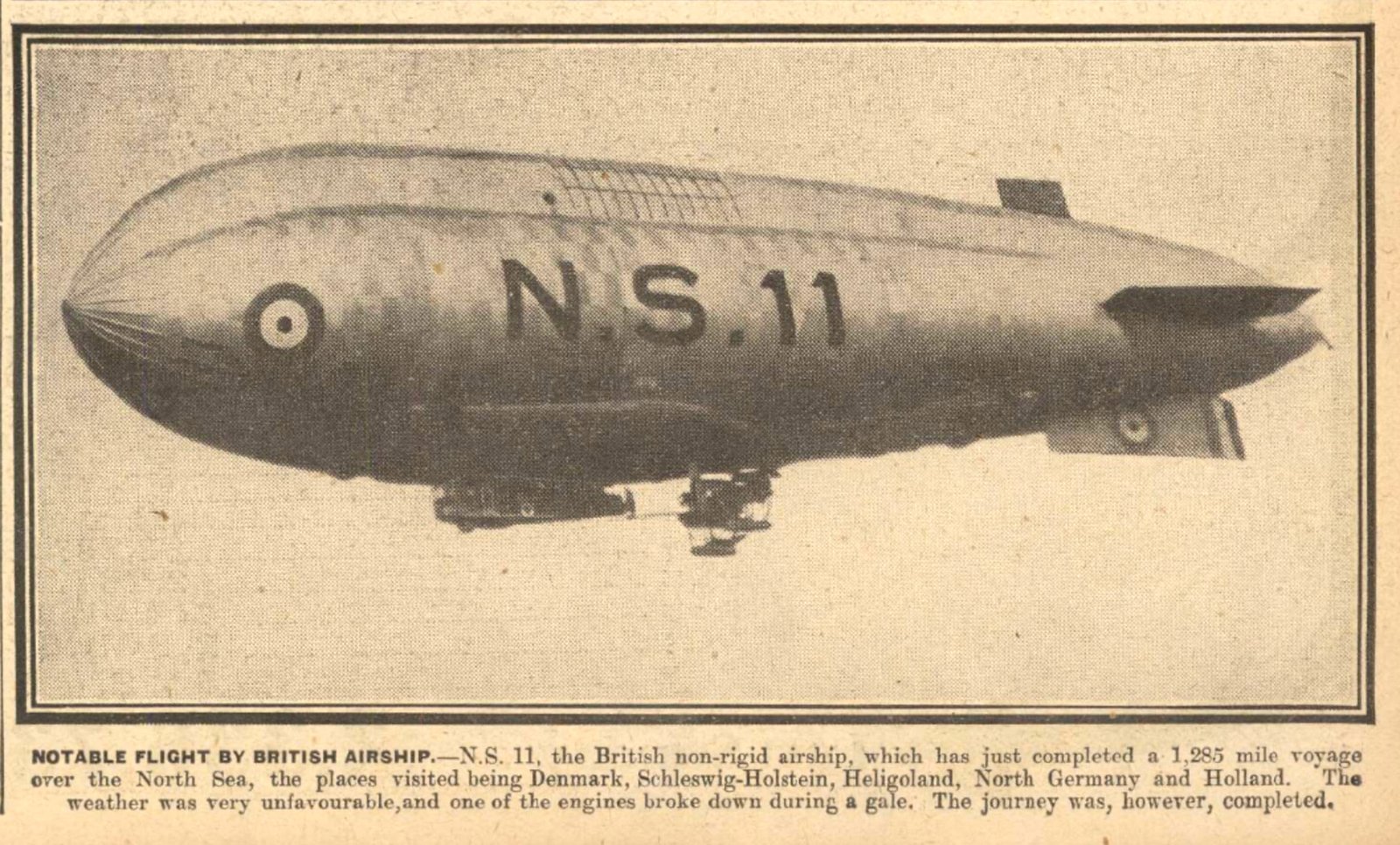
Daily Mirror Saturday 22 March 1919
NON-STOP FLIGHT OF 1,285 MILES
British airship’s record overseas voyage.
The story of the flight was widely covered in British and European newspapers, particularly in Denmark, Germany and Holland. From the War Press Bureau, the following account appeared in many British newspapers:
During the past few days a remarkable long-distance flight over the North Sea, was performed by the British non-rigid airship N.S.11.
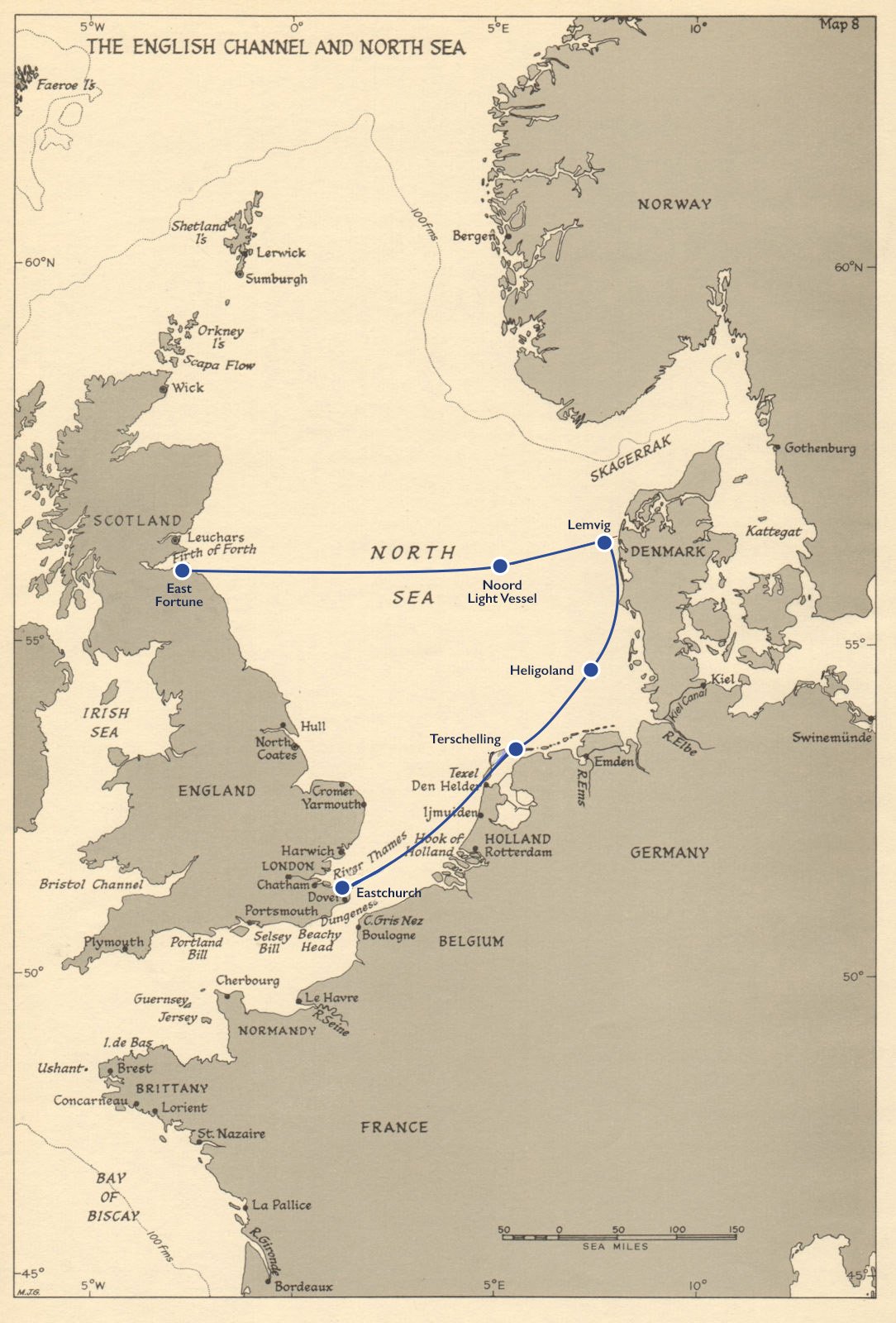
The voyage, which took the form of a circuit embracing the coast of Denmark, Schewig-Holstein, Heligoland, North Germany, and Holland, was characterised by extremely unfavourable weather conditions. For this reason it ranks amongst the most notable flights that have ever been undertaken.
The total length of the record trip was 1,285 air miles, the time taken being 40 1/2 hours.
Starting from an airship station on the Firth of Forth at 3.45 p.m. on Sunday last the airship laid straight course for Denmark, the wind the time blowing from the north-west with a force of 15-20 miles per hour. The Dogger Bank Noord Lighthouse was passed at 1 o’clock Monday morning.
Accurate Navigation
Although the night was intensely dark owing to the moon being obscured by clouds, so accurate was the navigation that the airship was not more than a mile out of her course in the 280 miles flight to this point.
From the Noord onwards the north-westerly wind continued to increase in velocity, and calcium flares were dropped into the sea at frequent intervals, from which bearings were taken to determine the increasing allowance fro drift.
Course was set for Denmark, and the Lemvig Light Vessel, 370 miles from the base, was picked up at five o’clock Monday morning. Turning south the airship cruised down the coast of Denmark, Schlesweig-Holstein towards Heligoland.
With sunrise, the weather conditions became worse, and after passing through several small storms and rain squalls in the Heligoland Bight, Heligoland was reached at eight o’clock.
Passing at a distance of four miles from the island, a new course was set for the Frisian Islands, and at six o’clock in the evening the airship was off Terschelling, the wind having now attained a speed of thirty knots from the north-west.
Troubles arise
After leaving the Dutch coast to return to England, the airship’s troubles commenced. Hourly the wind grew stronger and rougher, and it appeared impossible for the airship to return to its destination. In addition, other difficulties arose. At midnight one engine broke down, and the airship was forced a considerable distance to leeward.
At this stage it was uncertain whether England could be reached at all, and a landing in France was contemplated by her captain. But eventually it was decided to hold on in hope of the wind abating. Fortunately, this is what occurred, and a ‘landfall’ was made at the last point on the English coast, the North Foreland.
By this time petrol was running short owing to the necessity of running at full power earlier in the voyage, and one engine only was running – this on five cylinders out of six.
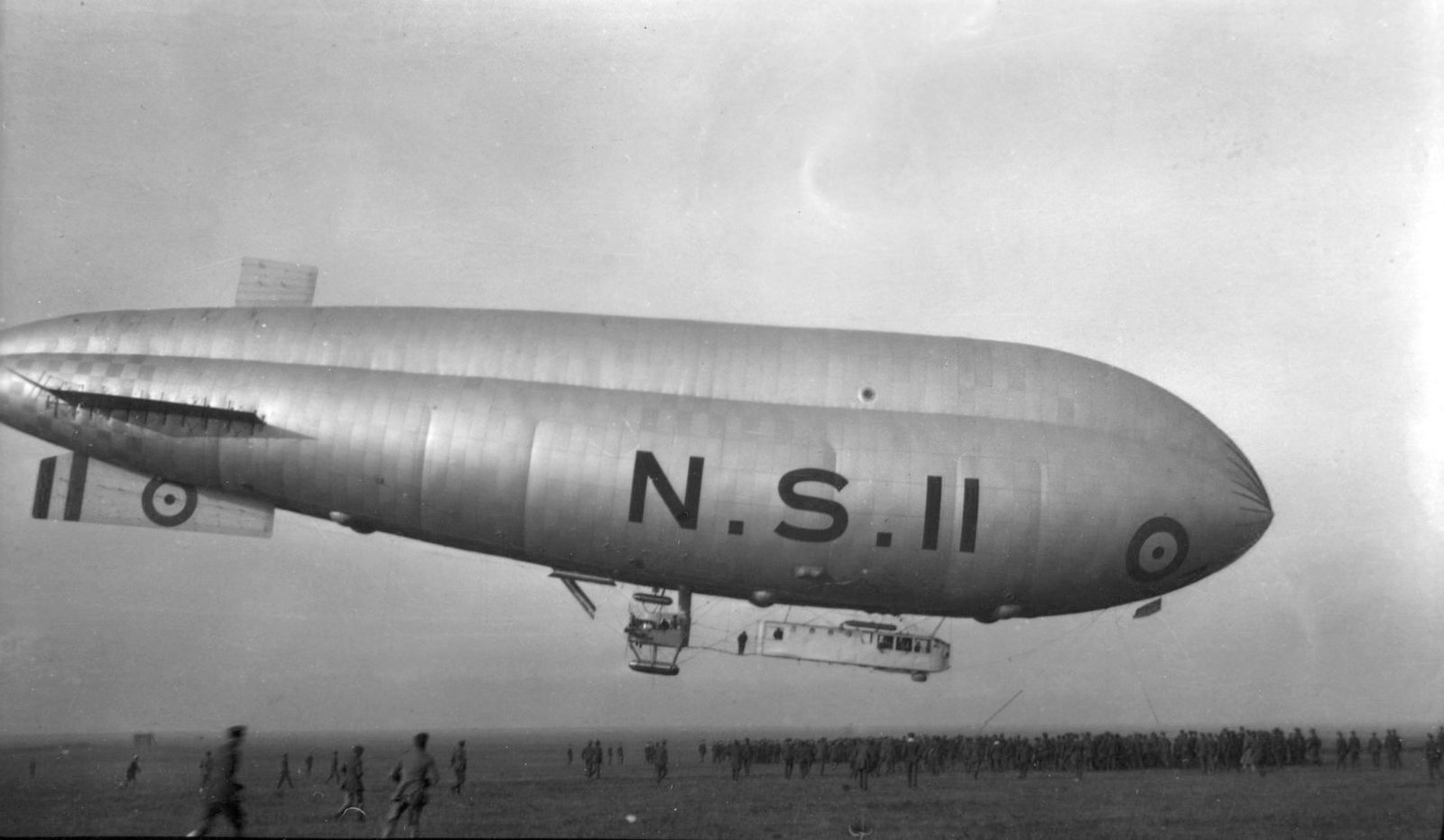
N.S.11 coming in to land at RAF Eastchurch, the personnel of which would have been unused to handling airships. Image: Adolphe Henri DuBois Special Photo Collection, San Diego Air & Space Museum.
At 8.15 on Tuesday morning a landing was successfully effected at an aeroplane station close by, the airship being handled by an untrained party of boy mechanics, who had never before seen an airship at close quarters.
Longest Overseas Voyage
So violent was the wind during the last stage of the voyage to England, the gust reaching a velocity of fifty knots, that the crew has the greatest difficulty in controlling the airship. Furthermore, all suffered intensely from sea sickness, and owning to this cause pilots and coxswains required relief at very frequent intervals to maintain the navigation of the ship.
This flight is particularly noteworthy in view of the fact that is was carried out entirely over the sea. It is the longest non-stop oversea voyage of any British aircraft, and as far as is known, is a world’s record for non-rigid airships.
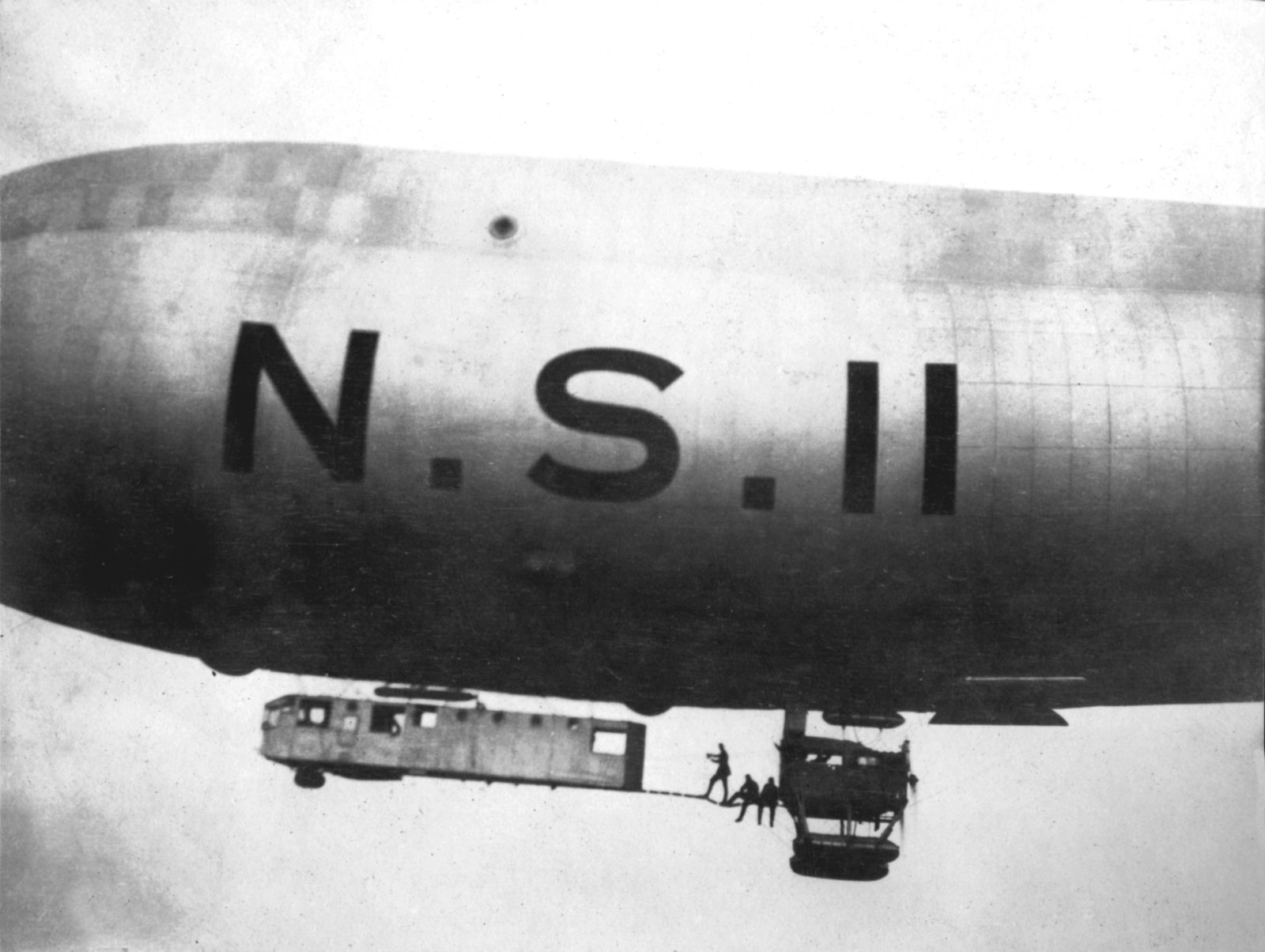
N.S.11 at Eastchurch with three members of the crew “hanging out” on the catwalk. Image: With kind permission of Trevor Henshaw from his book The Sky Their Battlefield 2
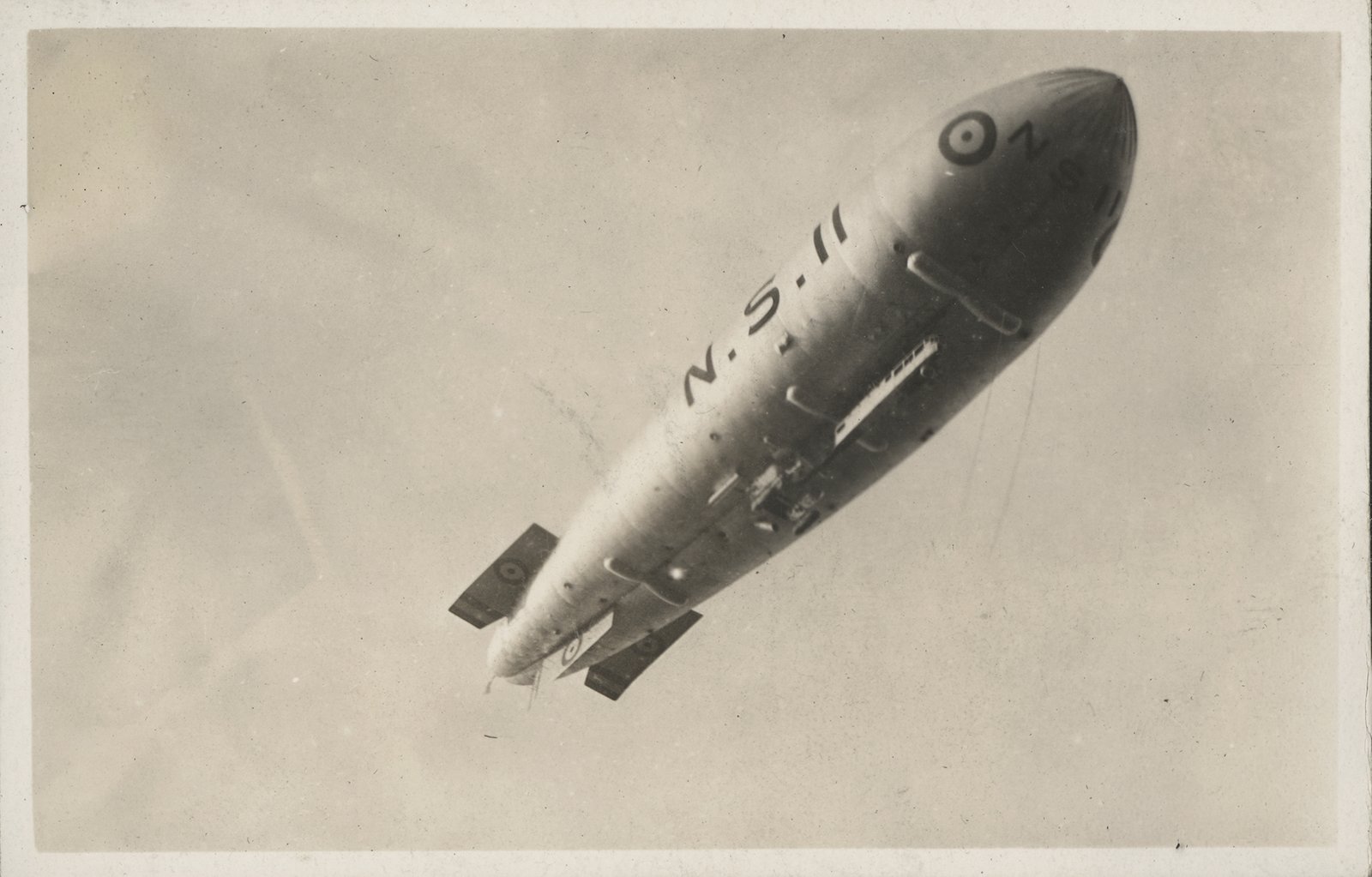
Arrival of N.S.11 at RAF Eastchurch, clearly showing only one ballonet tube lowered. Image: The Eric G. Peter Collection/The Museum of Flight
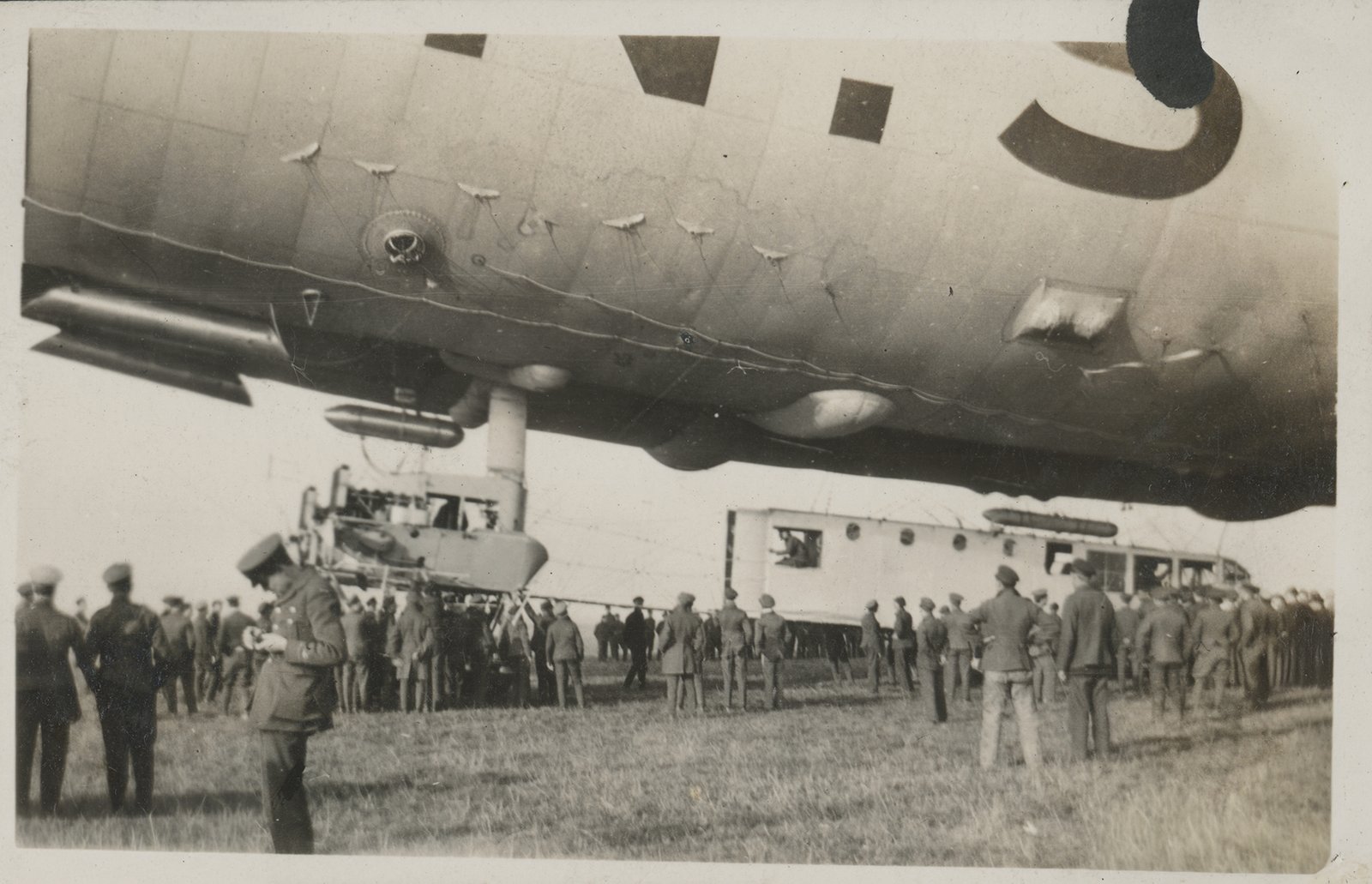
N.S.11 at RAF Eastchurch. Image: The Eric G. Peter Collection/The Museum of Flight
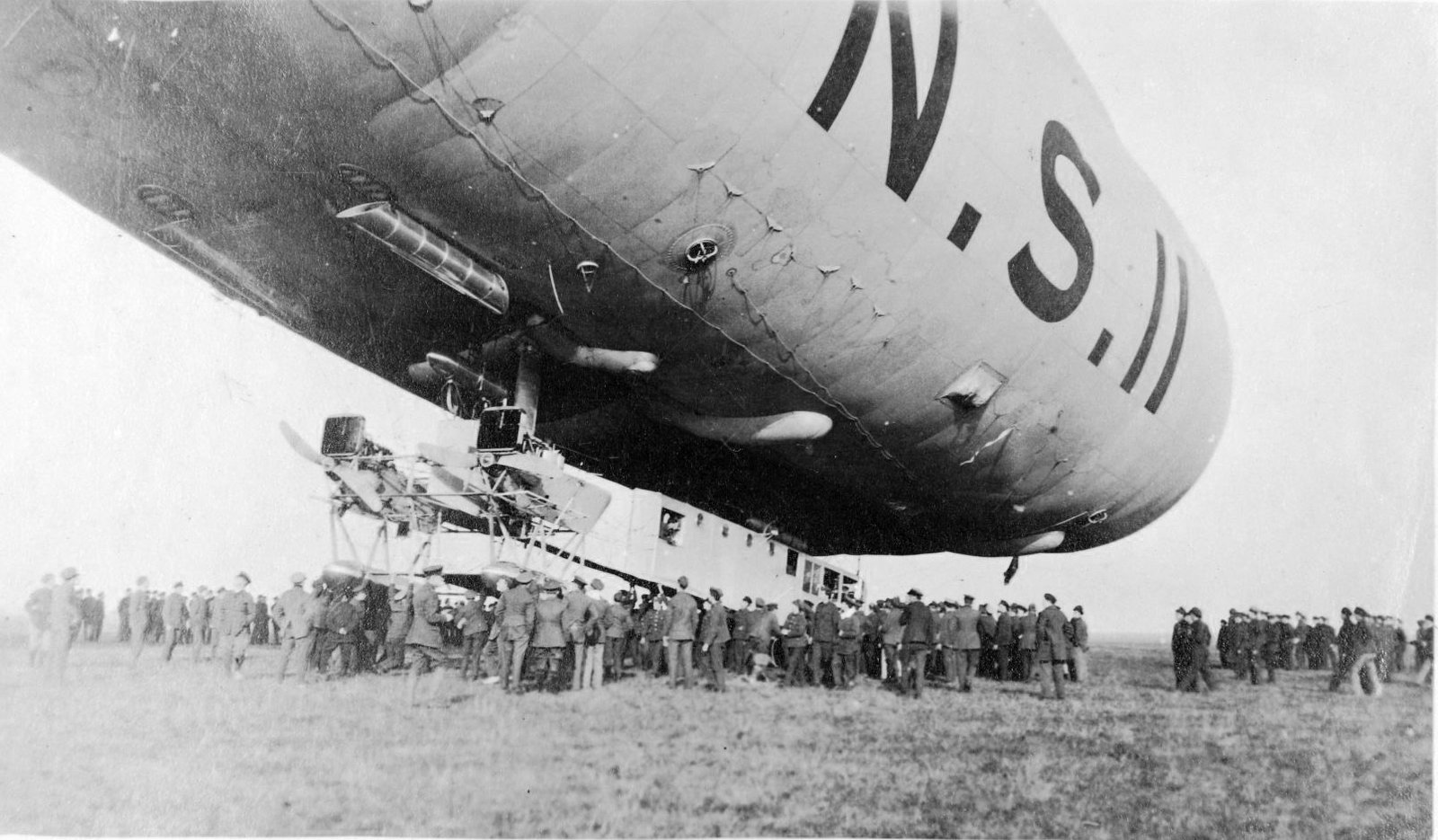
N.S.11 at Eastchurch air station showing the twin FIAT engines. Image: Adolphe Henri DuBois Special Photo Collection, San Diego Air & Space Museum.
The officers and crew of N.S.11 on this flight were:
- Capt W.K.F. G Warneford – Commander (killed when N.S.11 was lost on 15 July 1919)
- Capt A. J. H MacColl – 2nd Officer (had been flying with N.S.11 since 19 November 1919)
- Lt McConchie – 3rd Officer
- Sgt Stratton – Coxwain
- Cpl Stevens – Coxwain (with N.S.11 since 11 October 1918)
- Sgt Wrenn – Engineer (he had been flying with N.S.11 from at least 11 October 1918)
- Sgt Sansom – Engineer (with N.S.11 since 9 January 1919)
- Cpl Williams – WT Operator (he had been flying with N.S.11 from at least 11 October 1918)
- AC T. Connolly – WT Operator (later died when N.S.11 was lost on 15 July 1919)
- AC B. M. Hall – Unspecified crew member
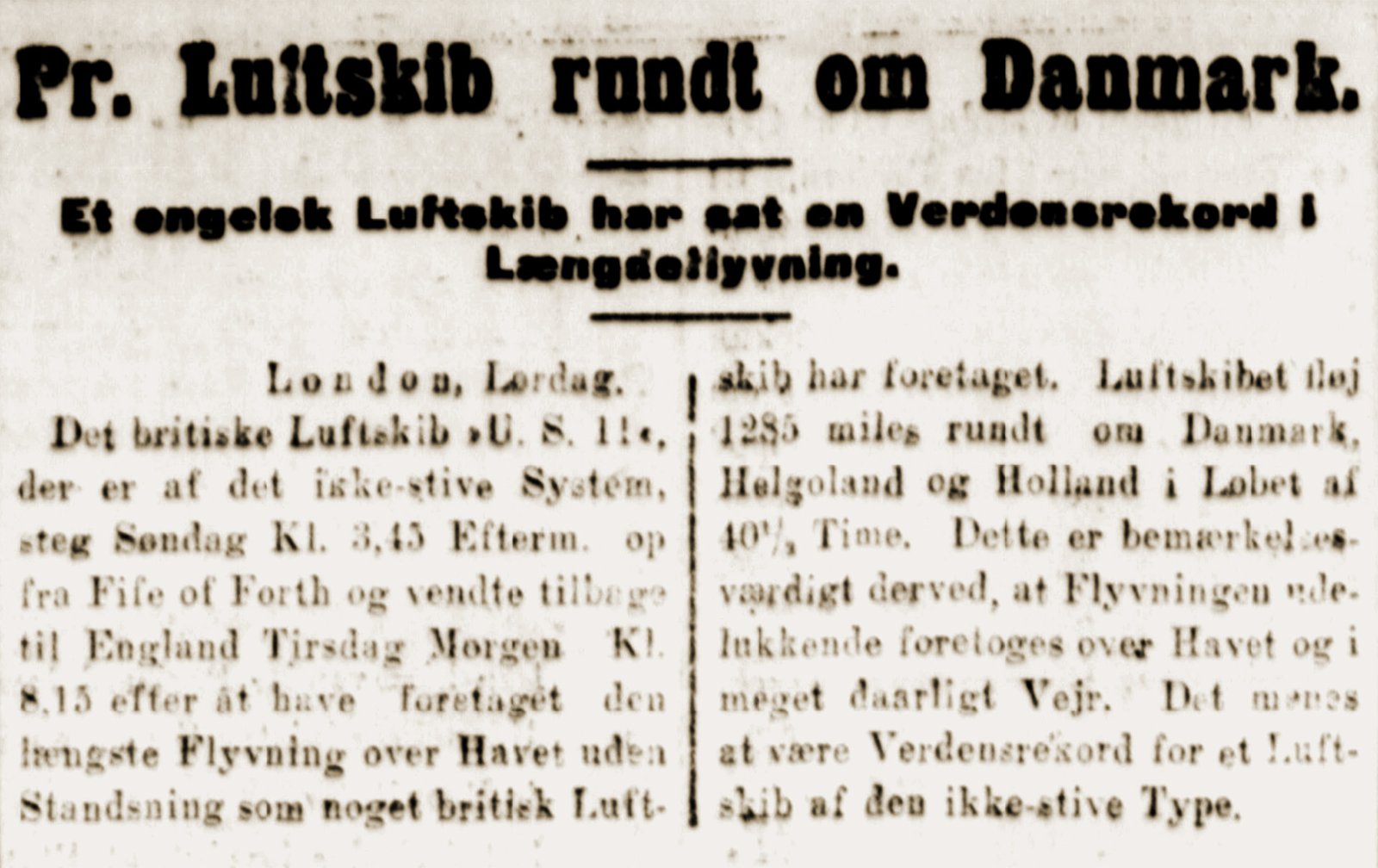
Account of the trip from Danish newspaper Fyns Ventreblad (Odense) 23 March 1919. Royal Danish Library.
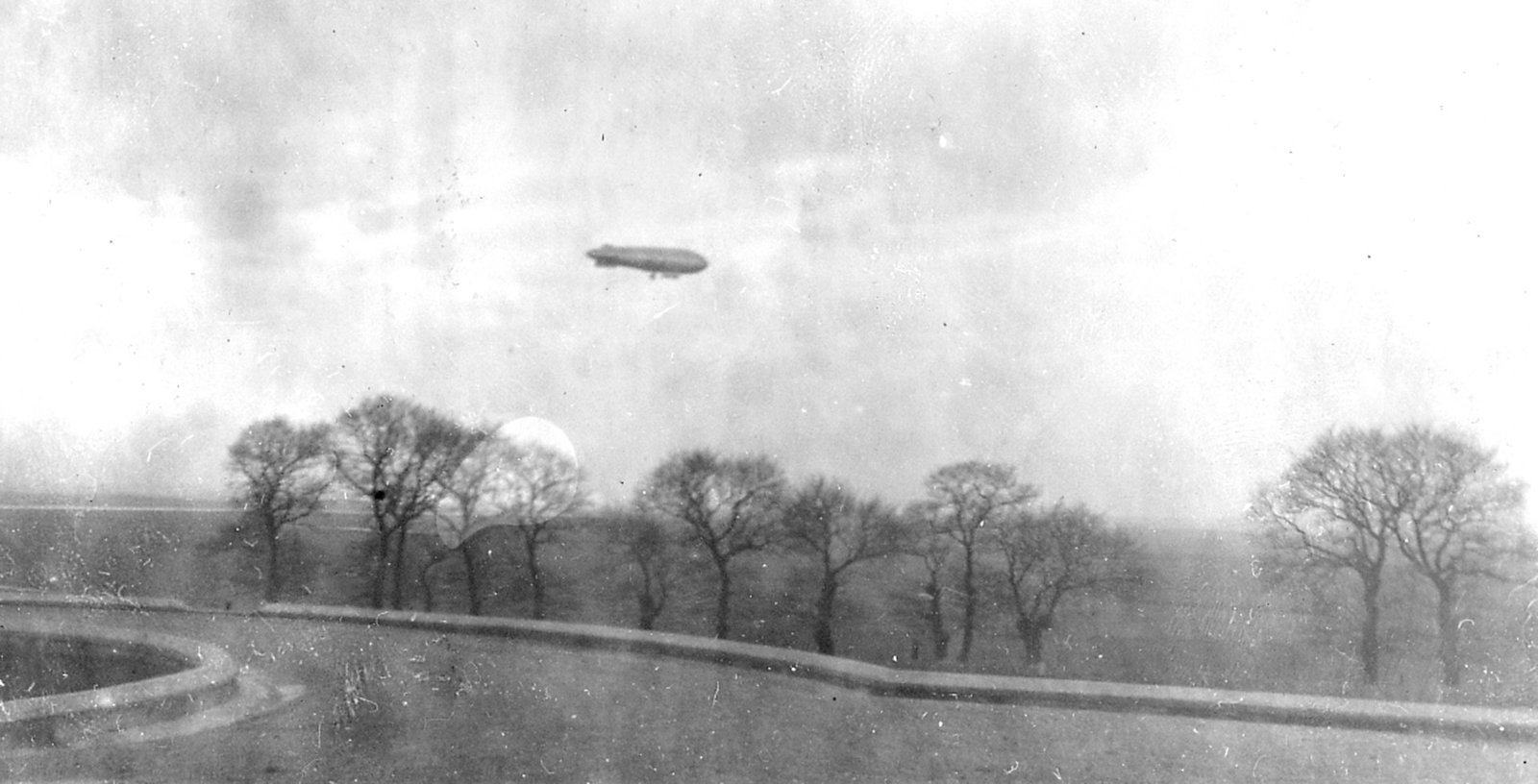
N.S.11 probably leaving RAF Eastchurch. From an album of photographs from 204 Training Depot Squadron. Image: With kind permission of Trevor Henshaw from his book The Sky Their Battlefield 2