
THE LAST CREW
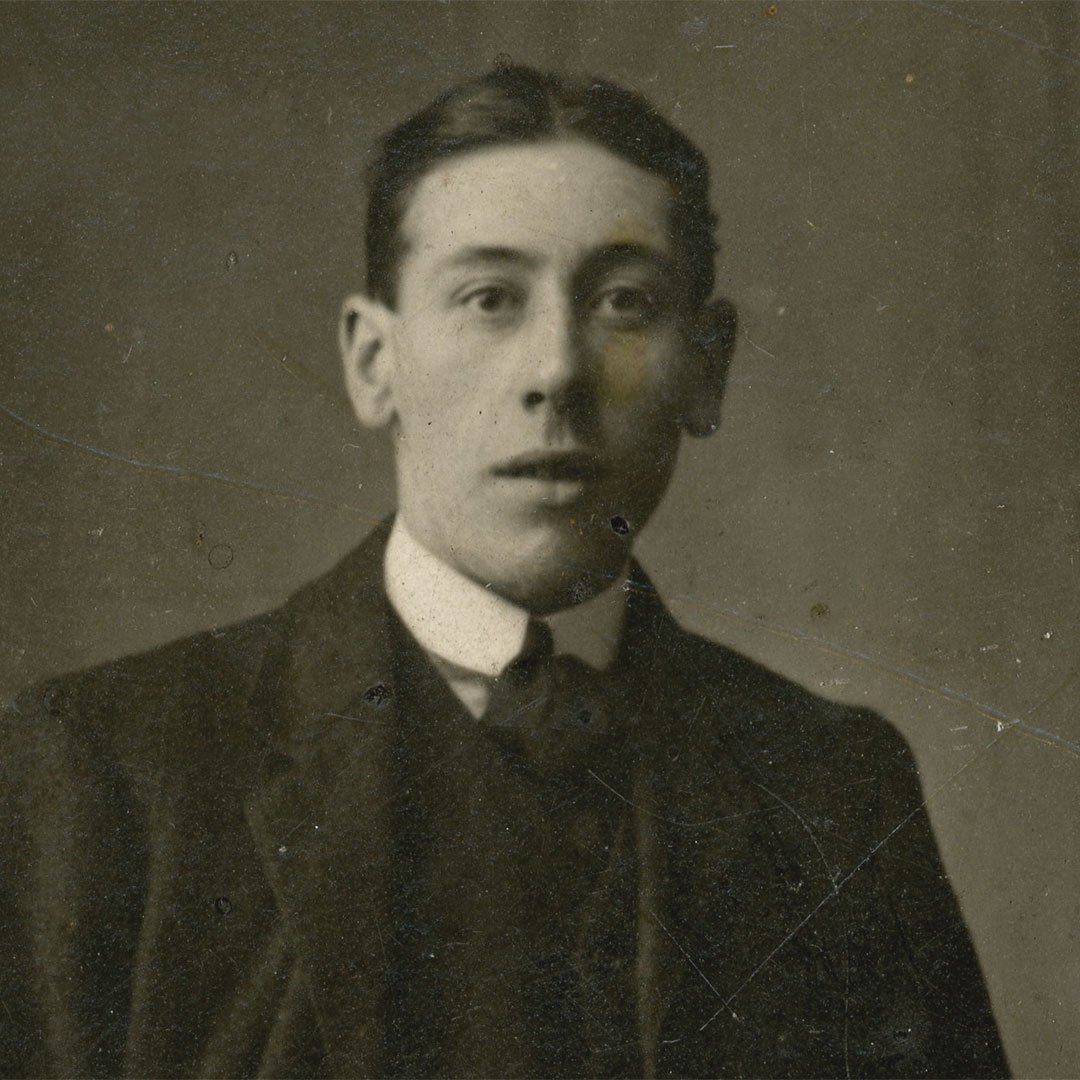
Thomas Connelly. Image: © National Museums Scotland / National Museum of Flight (Collection no. EF.2010.145)
Leading Aircraftman Thomas Connelly
W/T OPERATOR
Born in Airdrie, Lanarkshire on 30 September 1892, Thomas Connelly worked as a miner and warehouseman until he joined the Royal Naval Air Service as an Air Mechanic 2 at the age of 24 on 6 September 1916. He was the eldest son of Helen and Thaddeus Edward Connelly, also a miner. After a short stint on President II, Connelly was posted to Daedalus – the Royal Naval Air Service Training Establishment Cranwell on 12 September.
On 20 February 1917, Connelly was briefly transferred to the RNAS Flying School at Eastchurch, Kent – considered the home of the RNAS and British aviation itself. He then went to The RNAS seaplane base at Killingholme in Lincolnshire.
Moving back to Scotland on 20 April 1917, Thomas Connelly was posted to East Fortune where he remained until 1 February 1918. He is next recorded at Kingsnorth from 1 April 1918 (the official first day of the RAF) where he was W/T Operator of the Coastal airship C*3 starting with the delivery flight from Kingsnorth to East Fortune via Cranwell and Howden on 3 and 4 of April, 1918 then East Fortune. He is listed as regular crew for this airship until 31 July. He was promoted to Air Mechanic I on 19 July 1918. He was based at Kingsnorth from 30 July 1918; and Longside from 1 August 1918.
The next record we have of Connelly is a flight of 31 hours 34 minutes on N.S.4 commanded by Capt. R. S. Montagu on a Northern and Southern Patrol as well as escorting the troopship Stephen. At 2130 (17th) the Stephen was sighted escorted by HMS Destroyers Murray and Oracle off Kinnaird Head and the convoy escorted throughout the night as far as Stronsay Firth.
From this position at 0725 (18th) ship left the convoy and proceeded to Pentland Skerries to pick up the Homeward bound Scandinavian Convoy. After waiting three hours for the convoy, which was overdue, the airship was compelled to close on base owing to a radiator leaking. Repairs were effected however and the ship continued on patrol until evening set in when she returned to base.
He is next recorded on C*7 on 25 November 1918 as W/T operator on a trial flight over Ellon and Aberdeen. The aft radiator was boiling before the airship left the shed and aerodrome. The cover was removed, but whilst over Aberdeen the engine stopped and caught fire. The airship returned on the forward engine in strong wind and fog.
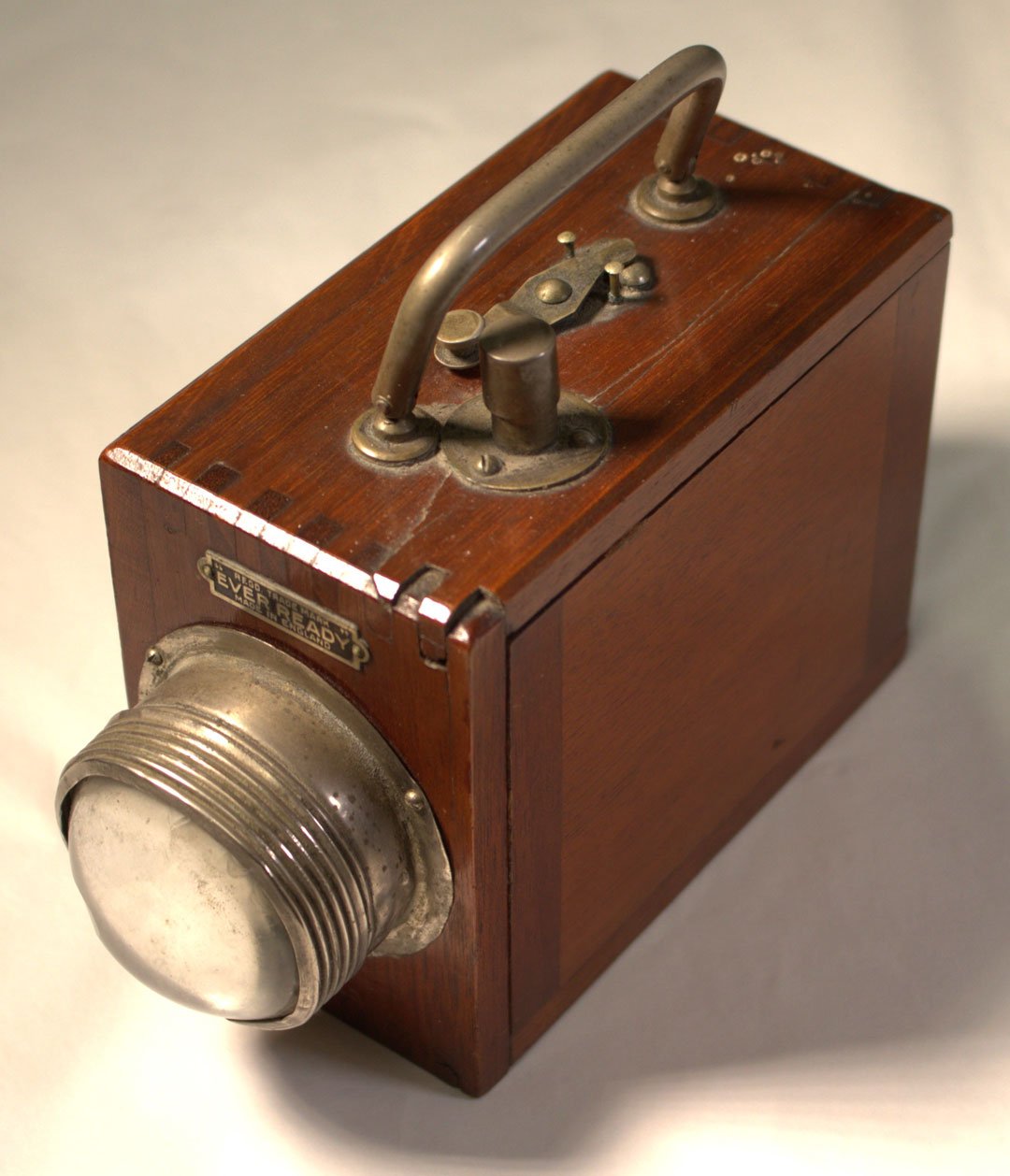
Thomas Connelly’s signalling lamp. Image: © National Museums Scotland / National Museum of Flight (Collection no. EF.2010.143)
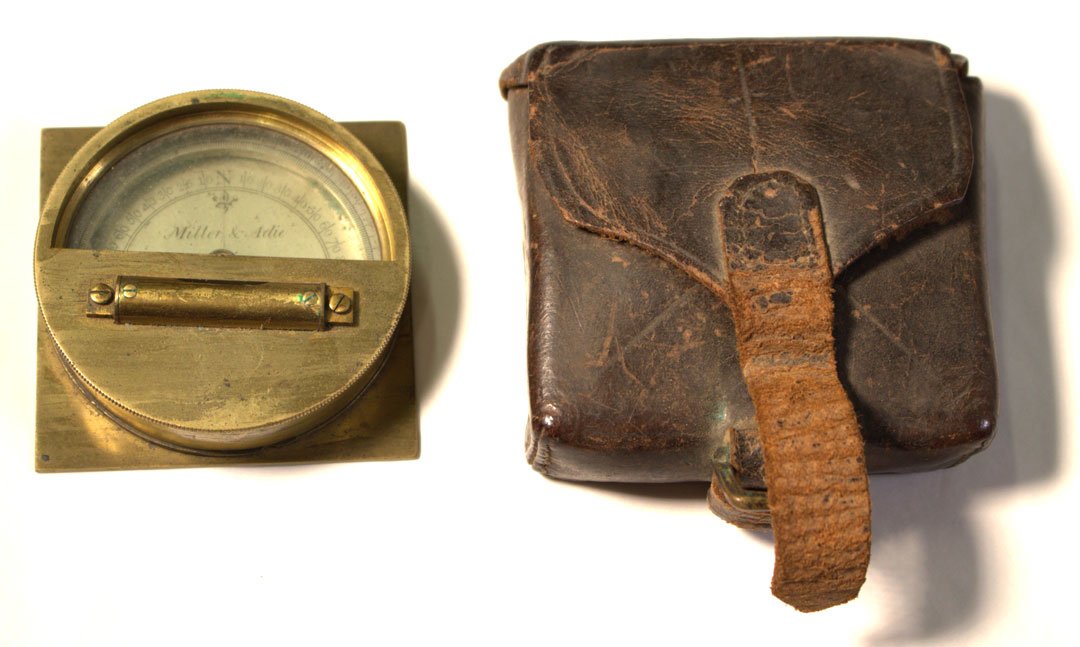
Thomas Connelly’s compass and case. Image: © National Museums Scotland / National Museum of Flight (Collection no. EF.2010.144.1 / EF.2010.144.2)
Thomas was at East Fortune from 5 March 1919 where he joined N.S.11 as W/T operator and was a member of the airship’s crew for its famous circuit of the North Sea flight. Then Kingsnorth from 19 March 1919; and East Fortune again from 31 March. He arrived at Pulham with N.S.11 on 19 June 1919. Apart from Warneford he was the only member of crew to have flown on N.S.11 before the night she was lost.
The Musselburgh News wrote on 25 July 1919…
“Being of an intelligent nature, he studied at the various night schools in Edinburgh, and when passed all his examinations he joined the airship service, where he has had many hairbreadth escapes, on one occasion floating on the sea for more than two hours till rescued in a very exhausted state by a torpedo boat. His brother James, who was a gardener with Sir Berkeley Milne, was killed at the battle of the Somme. “
At the time of his death (according to the Norfolk Chronicle) his home address was Midfield Cottage, Inveresk, Midlothian.
Service numbers: F20367/220367
East Fortune and the National Museum of Flight
Thanks to the National Museum of Flight, we have been able to include several of Thomas Connelly’s personal possessions and family items on this page. We are extremely grateful to National Museums Scotland, for photographing these objects and allowing us to share them here.
The Museum of Flight occupies the historic airfield at East Fortune, one of the most important surviving sites in the history of British airships. During the First World War it was a major airship station and N.S.11 was based there for periods of her service – notably it being the starting point of its widely-reported circuit of the North Sea. It was also from East Fortune that R.34 departed on 2 July 1919 to make the first east-to-west crossing of the Atlantic by air.
Today, the museum and the wider collections of National Museums Scotland preserve an exceptional body of airship material, including objects and records connected with R.34, Brigadier-General E. M. Maitland and the men and women of the airship service. These collections – and the knowledge of the people who care for them – are essential to preserving and understanding this remarkable part of our aviation history.
Discover the National Museum of Flight
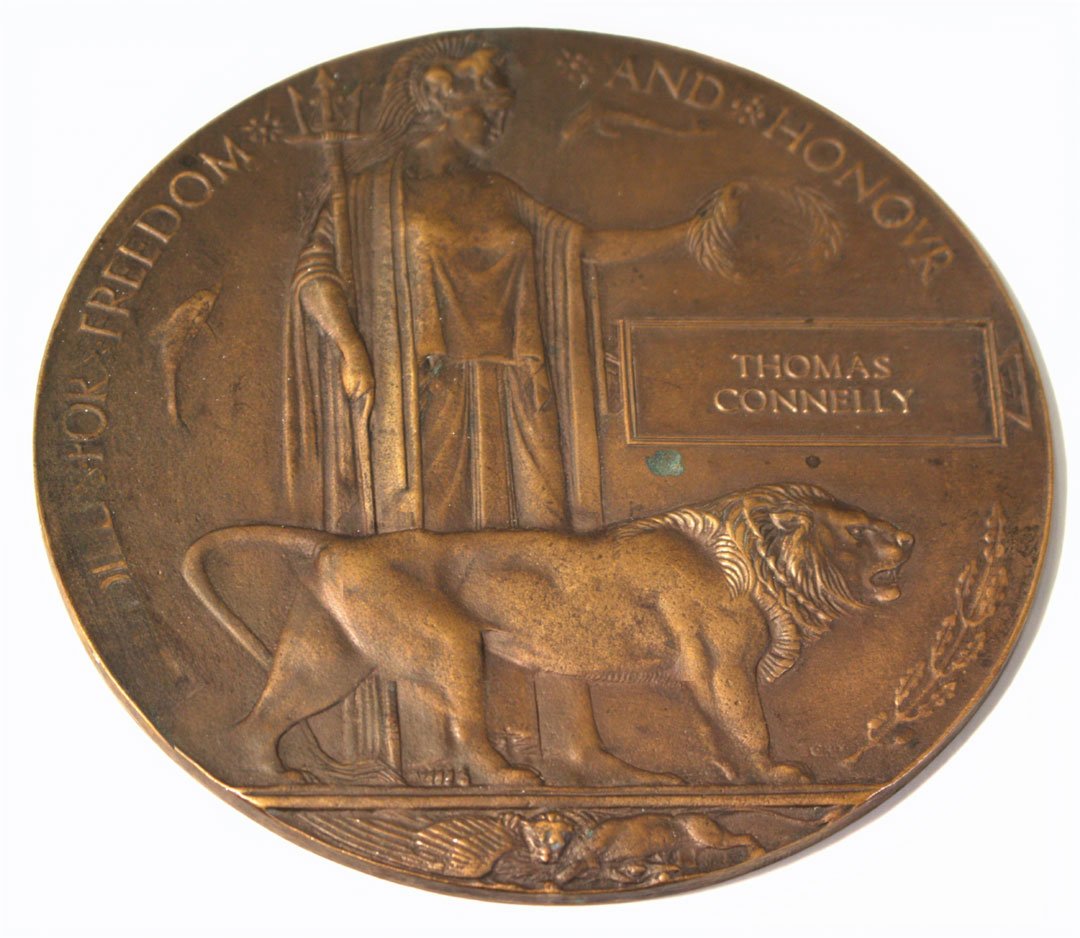
Next of Kin Memorial Plaque (Death Penny) for Thomas Connelly. Image: © National Museums Scotland / National Museum of Flight (Collection no. EF.2010.146)
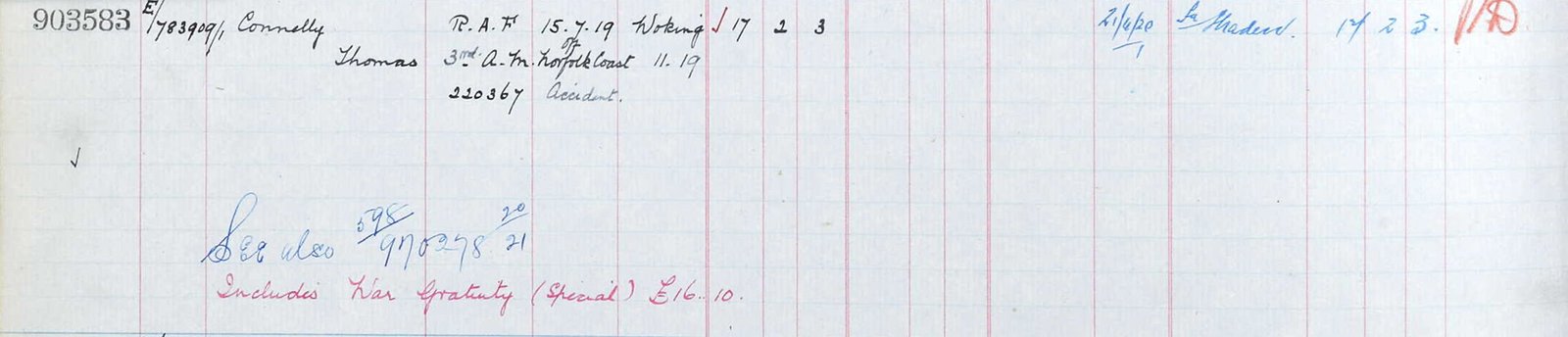
Army Register of Soldier’s Effects for Thomas Connelly. Image: The National Archives.
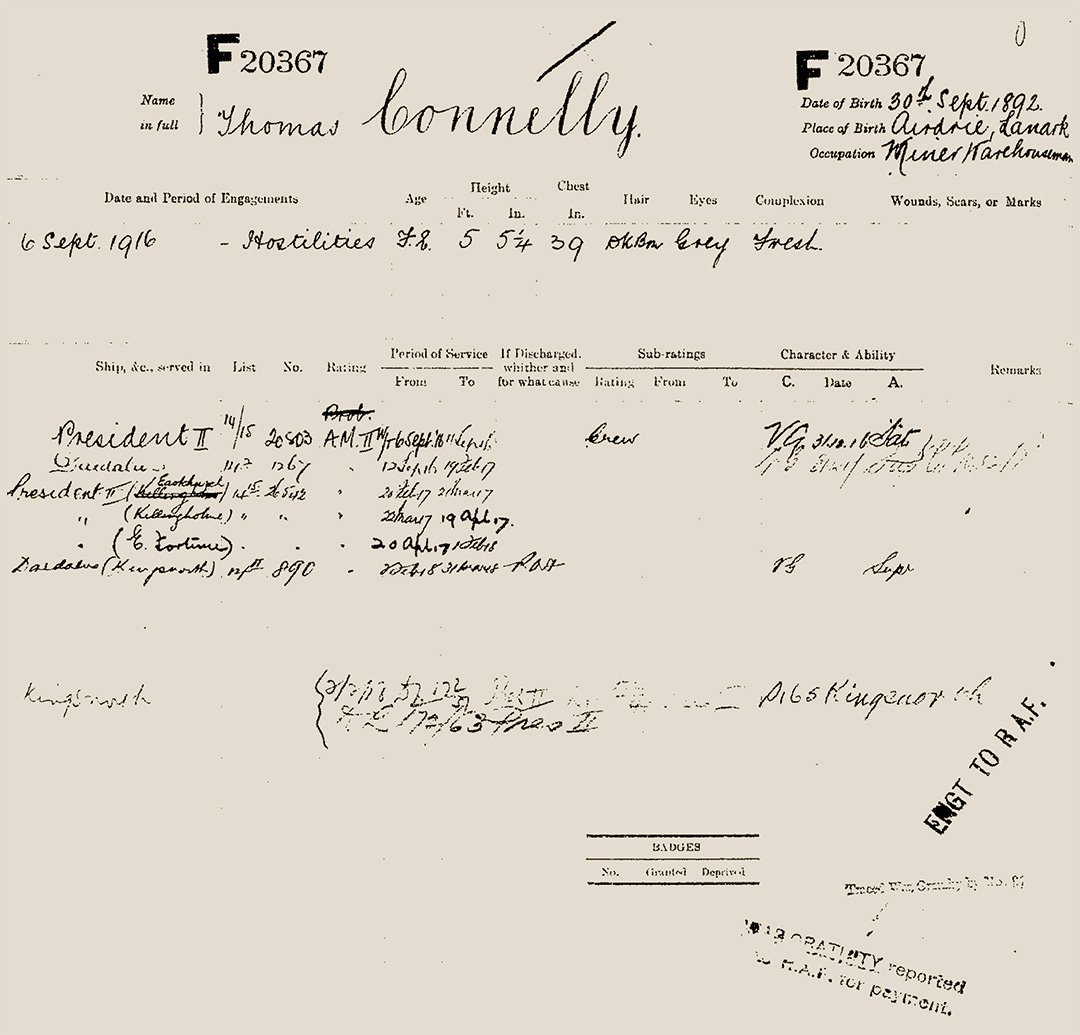
Thomas Connelly’s service history. Image: The National Archives
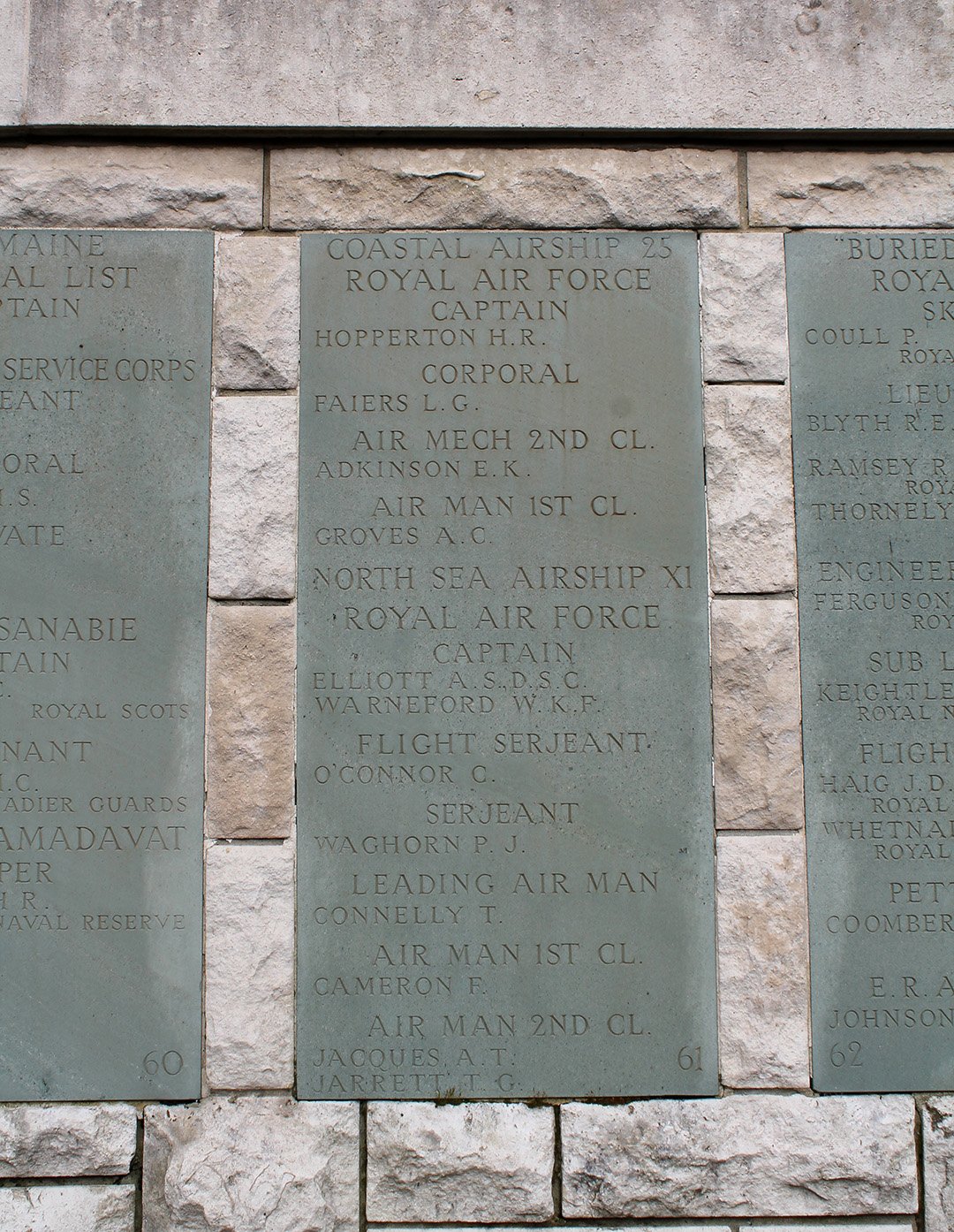
Thomas is commemorated on the Hollybrook Memorial in Southampton. Photo: Helen Wallbridge.