
GUARDIANS OF THE SEA
British Airship Stations of the Great War
During the First World War, Britain faced a growing and deeply modern threat beneath the waves. German U-boats attacked merchant shipping with increasing effectiveness, threatening the arteries of trade and supply upon which Britain depended. In response, the Royal Navy and the newly established Royal Naval Air Service (RNAS) turned to a remarkable technology that now seems almost dreamlike: the military airship.
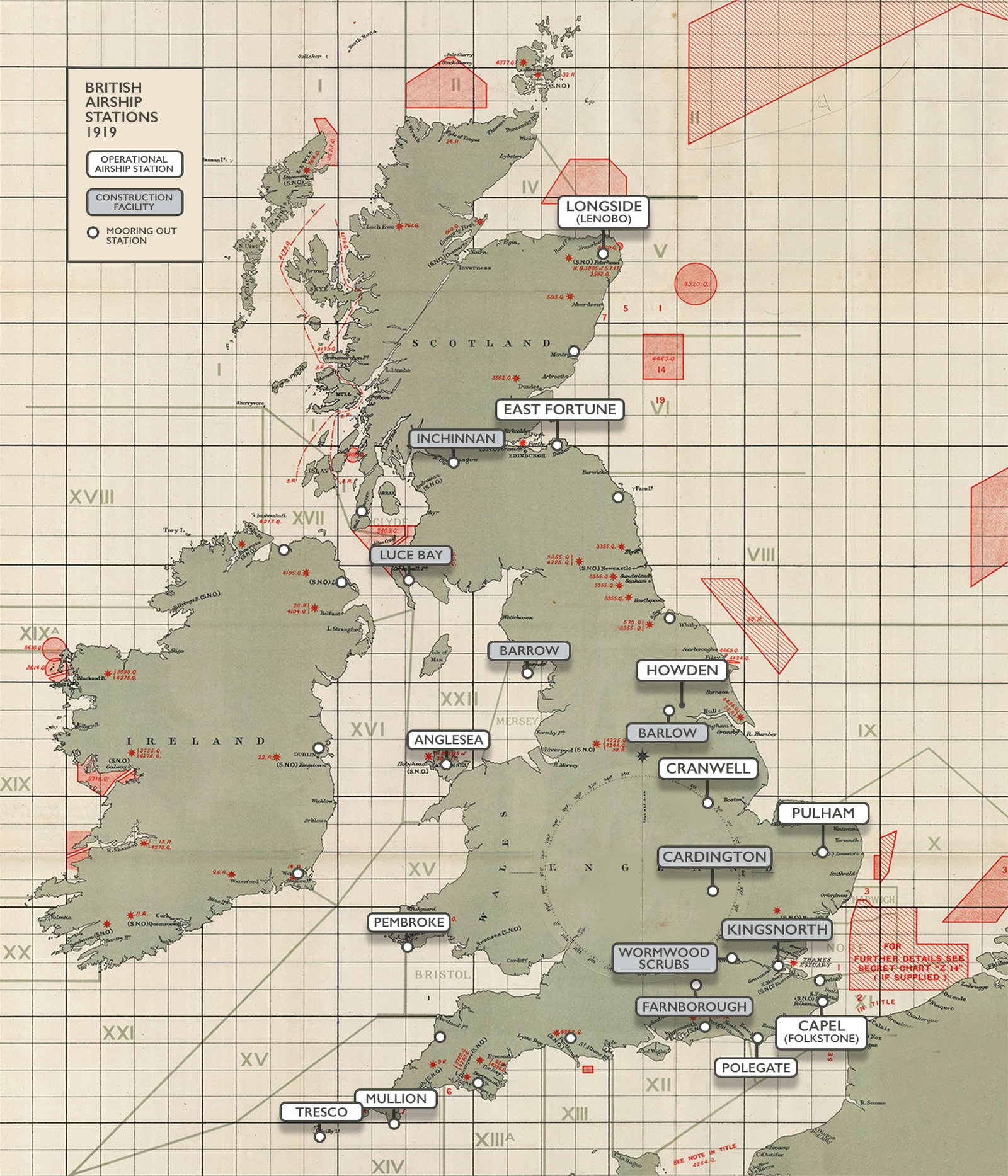
While German Zeppelins became famous for bombing raids over Britain, British airships developed along a rather different path. The British emphasis was not strategic bombing, but reconnaissance, convoy escort, anti-submarine patrols, and coastal surveillance. To support these operations, a chain of airship stations appeared around the British coastline, stretching from Kent to Scotland, from Wales to East Anglia.
Many of these stations later passed into the hands of the Royal Air Force after the formation of the RAF in April 1918, when the RNAS merged with the Royal Flying Corps. Though most have vanished physically, they represented one of the earliest integrated aerial defence networks in British military history.
The Rise of the RNAS Airship Network
The Royal Naval Air Service was formally established in 1914 and rapidly recognised the usefulness of lighter-than-air craft for maritime operations. Early aircraft had limited endurance and struggled in poor weather over the sea. Airships, however, could remain airborne for long periods, travel slowly while searching for submarines, and operate over wide stretches of coastline.
Britain constructed a remarkable network of stations devoted to non-rigid and semi-rigid airships, often called “blimps”. These stations typically included:
- Vast airship sheds or hangars
- Hydrogen production facilities
- Mooring grounds
- Workshops and repair depots
- Accommodation huts and mess buildings
- Meteorological stations
- Wireless communication facilities
The stations were carefully positioned to guard vulnerable shipping lanes, estuaries, naval anchorages, and convoy routes.
By the end of the war, dozens of airship sheds had been built and Britain operated one of the world’s largest lighter-than-air military infrastructures.
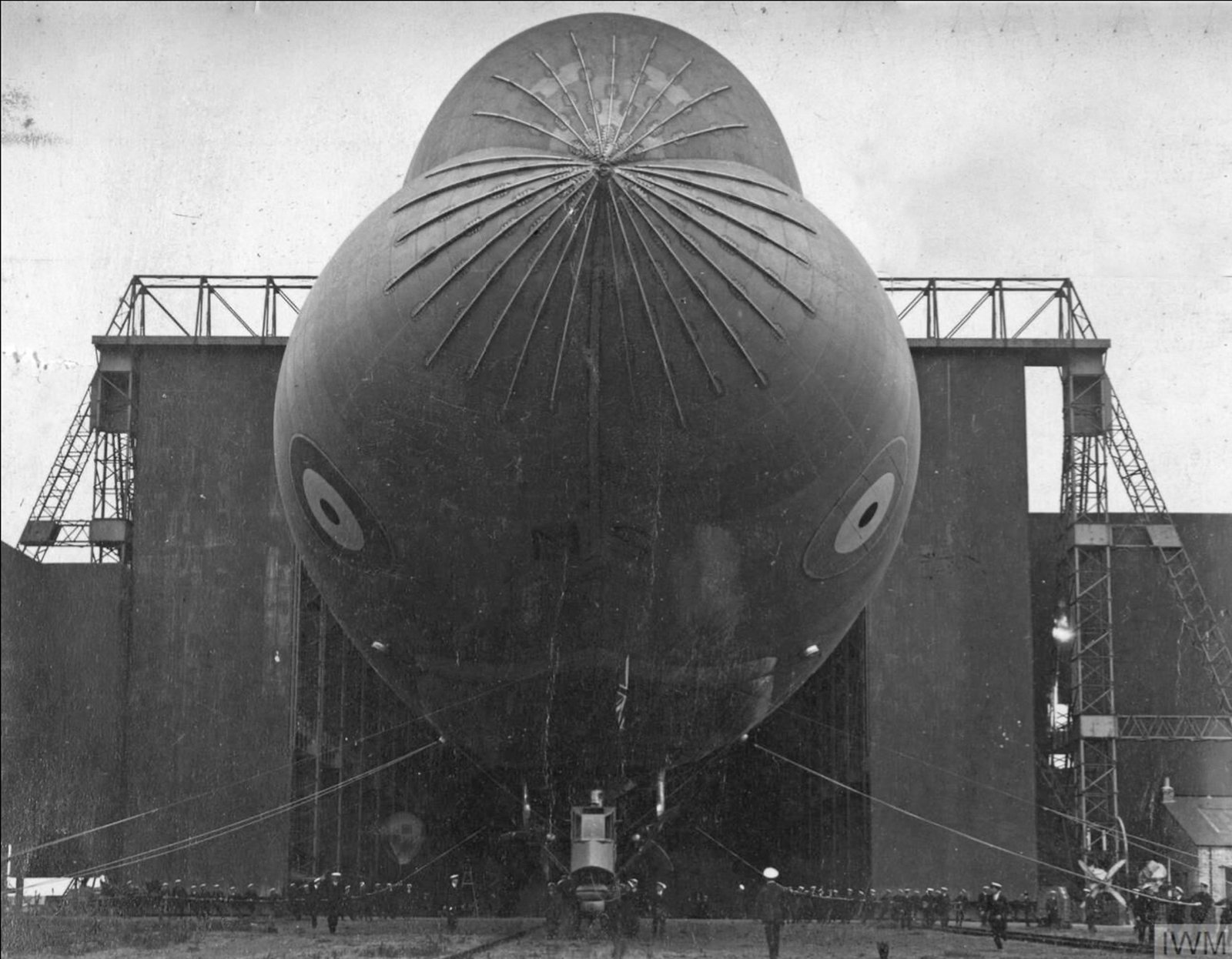
Front view of a North Sea (N.S.) class non-rigid airship being lead out of its shed by a team of handlers. Image: IWM / Q 84725
British Airship Stations
RNAS Kingsnorth, Isle of Grain, Kent
Perhaps the most important early British airship station was RNAS Kingsnorth on the Hoo Peninsula in Kent. Established before the war in 1913–14, Kingsnorth became a centre for experimentation, training, and production.
Unlike many stations that focused purely on patrol duties, Kingsnorth served as the intellectual and technical heart of Britain’s airship programme. Experimental airships were designed and tested there, and many early British non-rigid designs were refined at the station. Kingsnorth was where every North Sea Class airship was constructed.
Its strategic position overlooking the Thames Estuary allowed patrols to monitor approaches to London and major shipping routes. The station also played an important role in anti-submarine operations in the North Sea.
Kingsnorth possessed enormous sheds visible for miles across the Kent marshes. Airships based there included the famous Submarine Scout (SS) class and later Coastal class vessels.
After 1918 the station transferred to RAF control and remained active into the early interwar years.
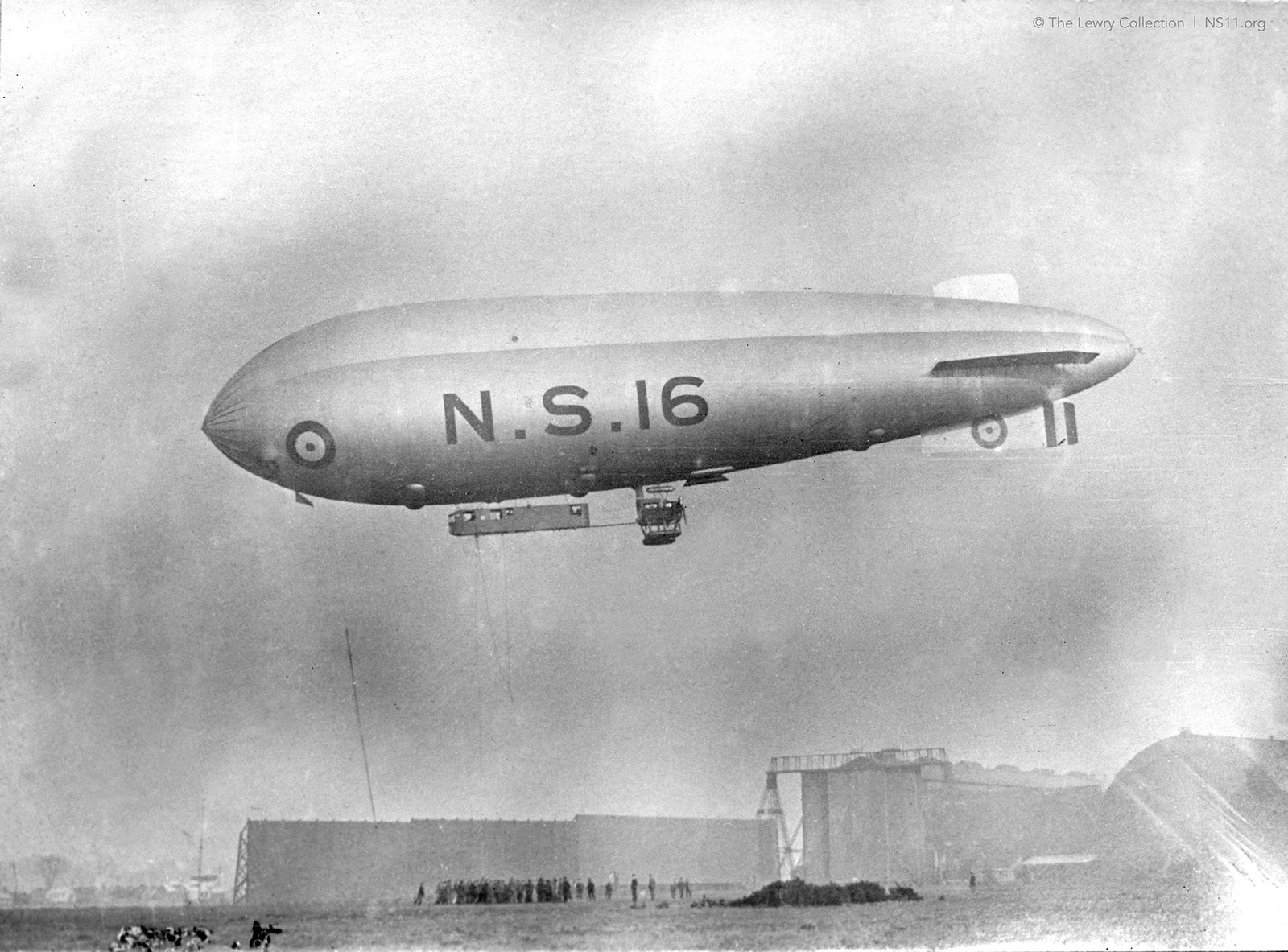
N.S.16 at kingsnorth, Tuesday, 21 January 1919. Image: NS11.org
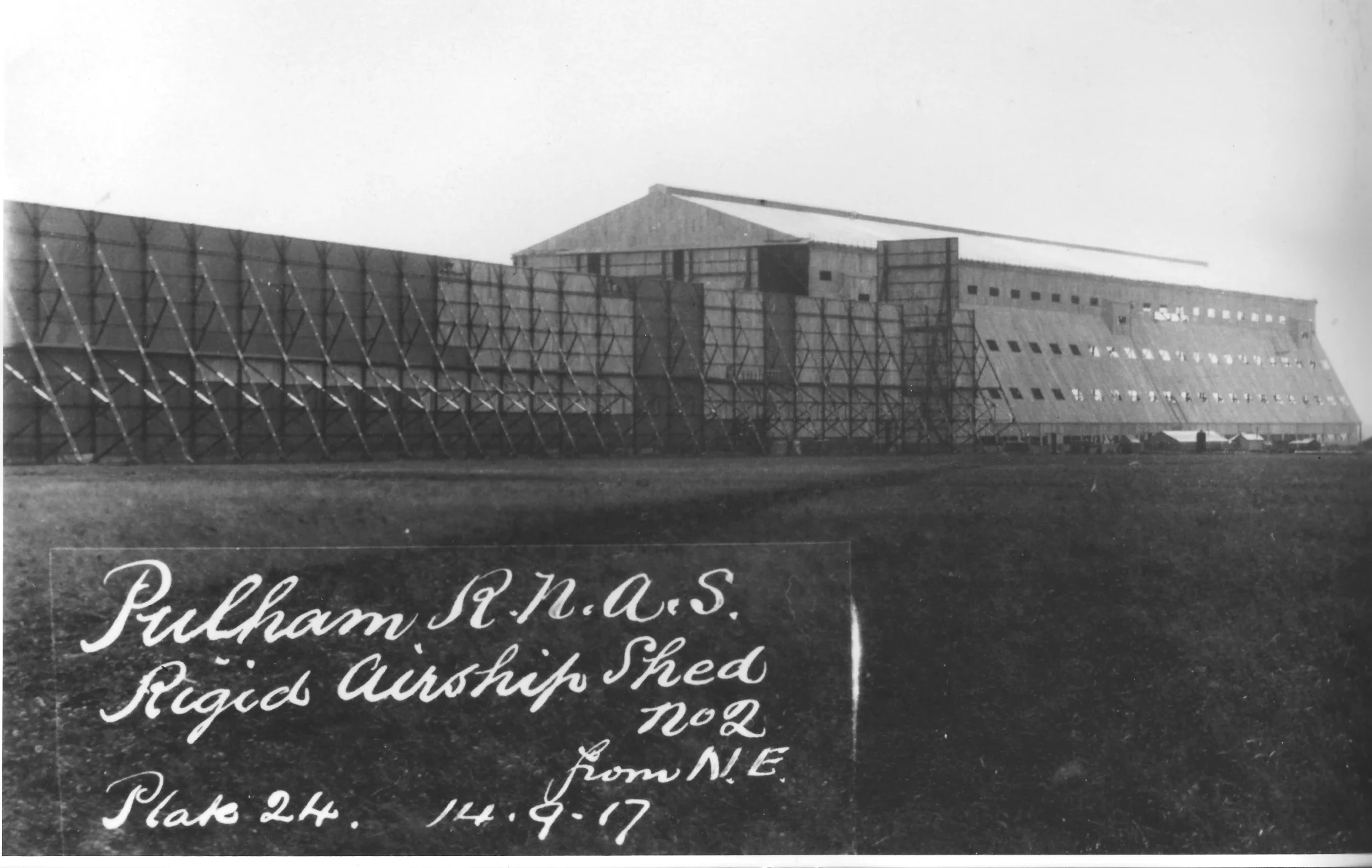
Pulham airship shed No. 2 and windbreak. This was the shed that was dismantled in 1927 and reconstructed at Cardington, Bedfordshire. It still stands and is used as a film studio and concert rehearsal stage. Image: Airship Heritage Trust
RNAS Pulham, Norfolk
Among all British airship stations, Pulham became one of the most famous and the station with the strongest association with N.S.11. Located in rural Norfolk near Pulham St Mary, the station began operations during the war and eventually evolved into Britain’s premier rigid airship base.
Initially Pulham supported anti-submarine patrols over the North Sea, operating non-rigid Coastal and SS-class airships. Local people affectionately nicknamed the craft “Pulham Pigs”, a term that became deeply associated with the station.
Pulham’s significance increased dramatically after the war. It became associated with the great rigid airships of the 1920s, including the R33 and the legendary R34, which completed the first east-to-west double crossing of the Atlantic just days before N.S.11 was lost.
The station eventually featured:
- Massive rigid airship sheds – one of which still stands at Cardington
- A hydrogen plant
- Experimental mooring systems
- Workshops and engineering facilities
- Parachute testing units
Pulham represented the transition from wartime coastal patrols to Britain’s ambitious post-war dreams of global airship travel.
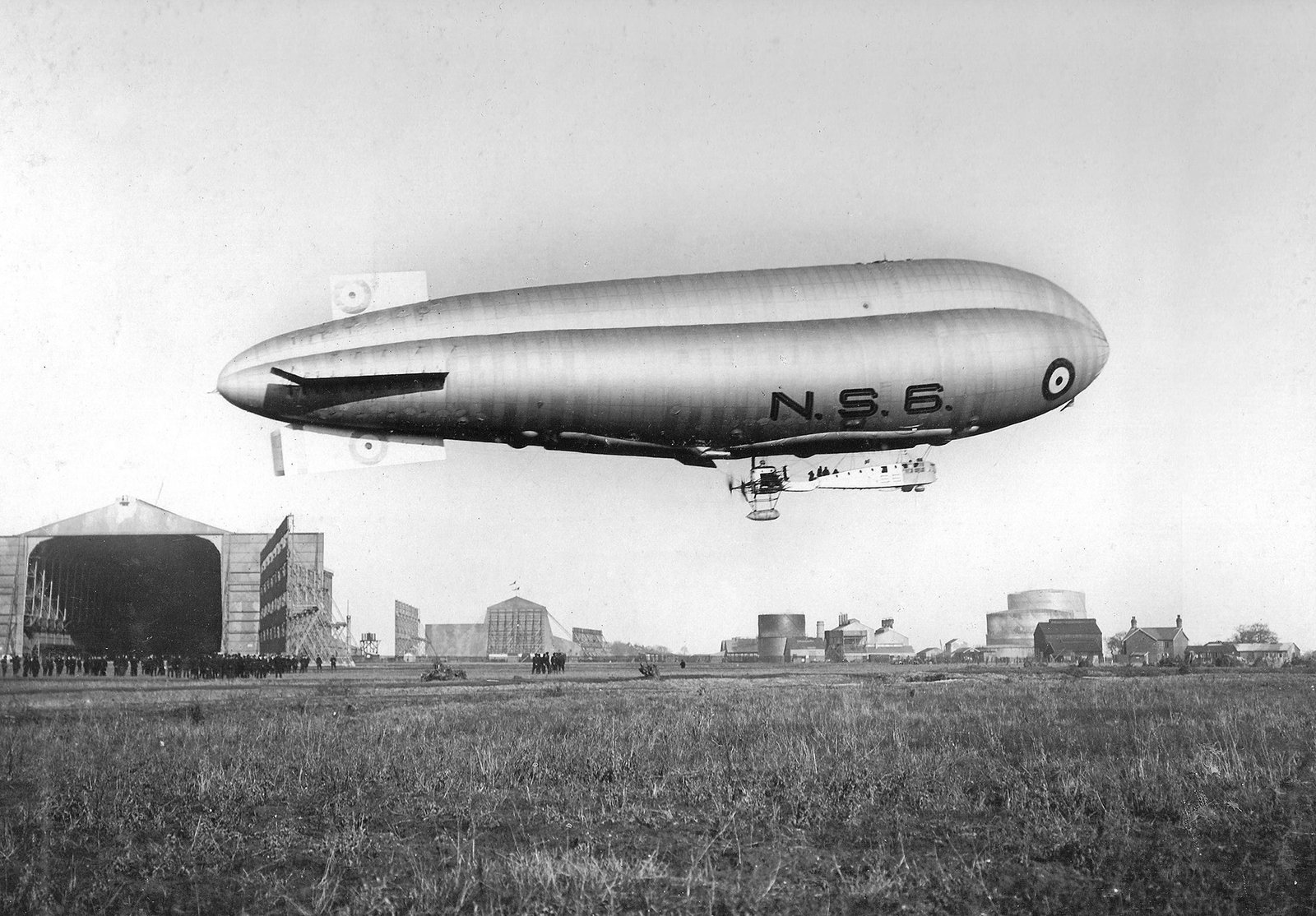
N.S.6 leaving Pulham for East Fortune. Image: The Pennoyer Centre
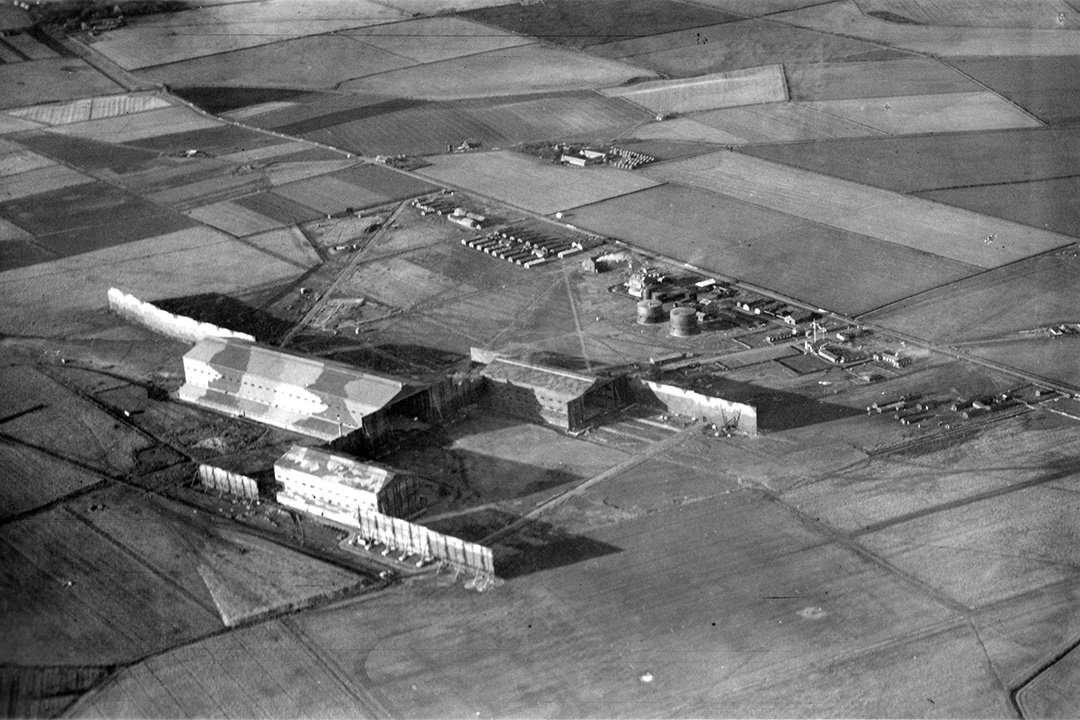
RNAS Longside (Lenabo), Aberdeenshire
RNAS Longside in Aberdeenshire was one of the most remote and atmospheric airship stations in Britain.
Constructed in 1915 and operational from 1916, the station guarded the shipping lanes of the northern North Sea. It became the most northerly mainland British airship station.
The scale of the site was enormous, covering several square kilometres amid bleak Scottish countryside. Local people referred to the airships using the Scots dialect phrase “Lenabo Soo”, comparing the ungainly craft to pigs drifting through the sky.
Longside’s patrols watched for German submarines threatening convoys moving around the east coast of Scotland.
Today little remains beyond traces hidden within forestry plantations.
RNAS East Fortune, East Lothian
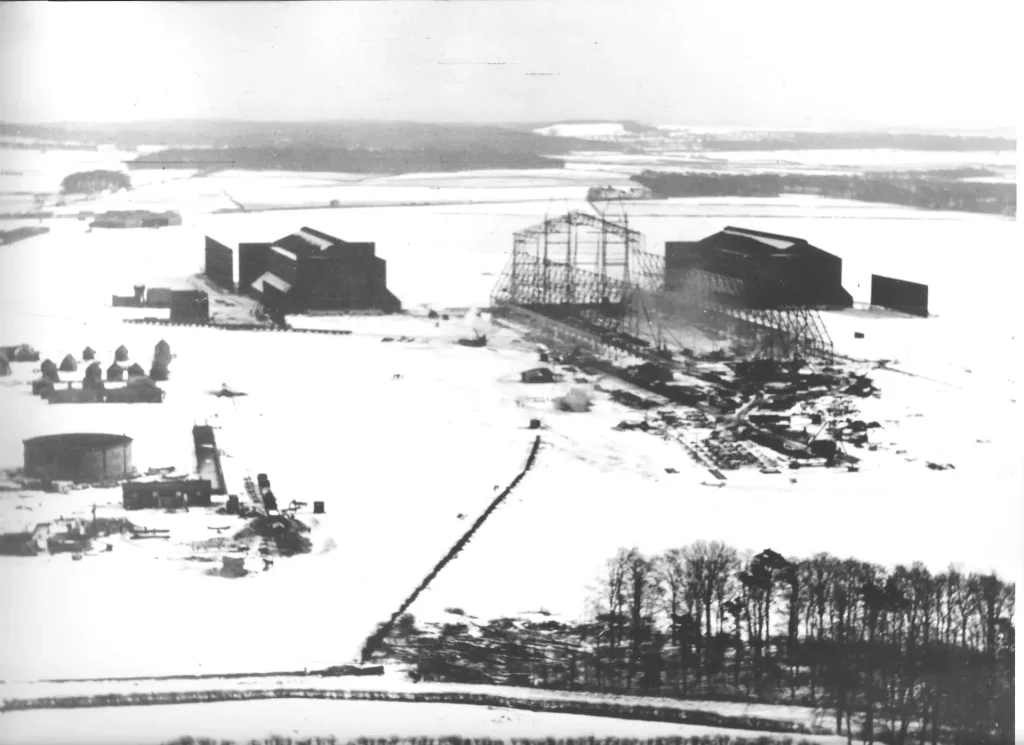
East Fortune became one of the most historically significant British airship stations of the Great War. Situated in East Lothian near the Firth of Forth, it occupied a strategically valuable position for protecting shipping routes on Scotland’s east coast.
Flying activity began there in 1915, before the station was formally commissioned as an RNAS establishment in 1916. The site rapidly expanded into a major naval aviation and airship base, with large sheds, hydrogen plants, workshops, and extensive accommodation. Coastal-class and North Sea-class non-rigid airships operated from the station on anti-submarine patrols over the North Sea.
East Fortune later became associated with Britain’s rigid airship programme. Giant sheds constructed in 1916 and 1917 housed rigid craft including R24 and R29. The station achieved lasting fame in July 1919 when the rigid airship R34 departed from East Fortune on the first east-to-west crossing of the Atlantic Ocean, reaching Long Island after a flight of more than 100 hours.
Following the creation of the RAF in 1918, the station became RAF East Fortune and also served as a torpedo training school. Although airship operations ceased in 1920, much of the station survived. Today the site forms part of the National Museum of Flight, where traces of the great airship era remain embedded in the landscape.
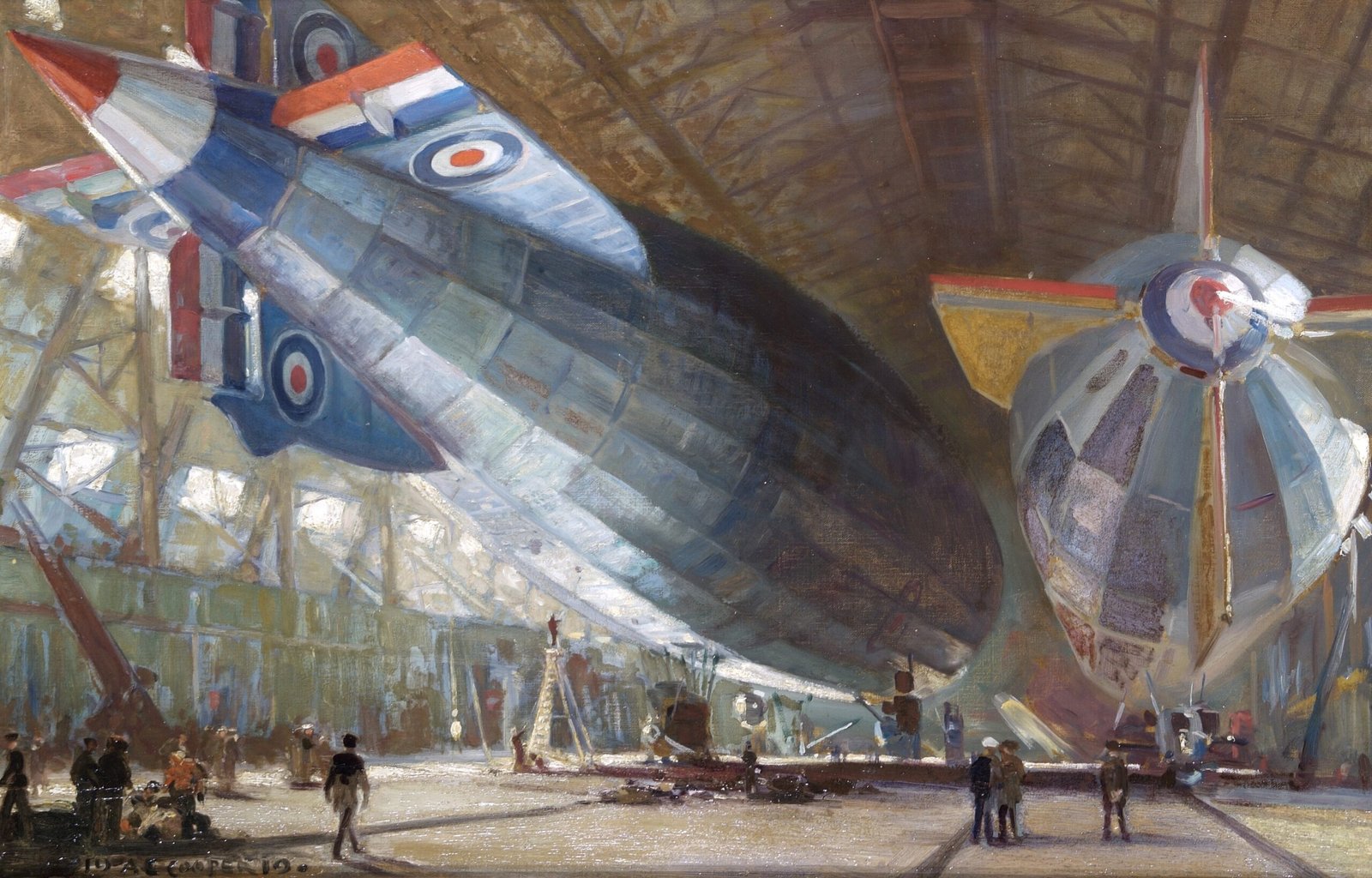
Airships ‘R34’ and ‘R29’ in a shed at East Fortune by Alfred Egerton Cooper. Image: IWM (IWMART4086)
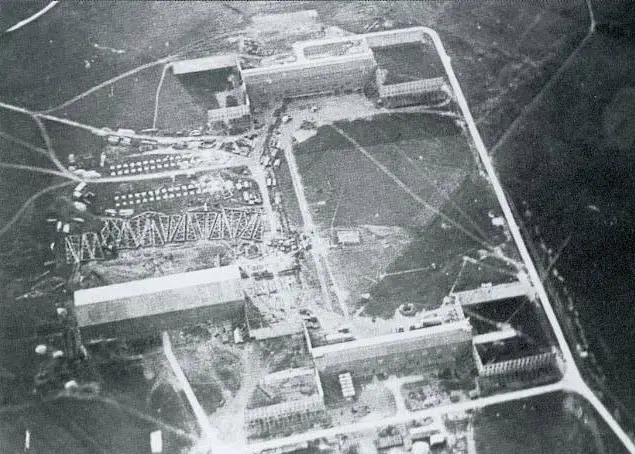
RNAS Capel (later RAF Folkestone), Kent
RNAS Capel was established in 1915 near Folkestone to counter the escalating German submarine threat in the Dover Strait.
The station occupied exposed fields on the cliffs above the Channel, an ideal location for rapid deployment over one of the busiest and most dangerous maritime regions in Europe.
Airships operating from Capel escorted shipping convoys, searched for submarines, and monitored enemy naval activity. The station formed part of a defensive chain protecting the approaches to the English Channel.
Capel’s operations demonstrated one of the key strengths of airships: endurance. Unlike many aircraft of the period, airships could remain on station for long periods while scanning the sea below.
Following the creation of the RAF in 1918, the station became RAF Folkestone before eventually closing after the war.
Barrow Airship Station
Barrow occupied a special place in British lighter-than-air history because it combined industrial production with operational airship development. The town’s strong naval engineering tradition, centred around the shipbuilding industry, made it a natural location for early British rigid airship construction.
During the years before and during the Great War, Barrow became closely associated with Vickers’ rigid airship programme. Several early British rigid airships, including His Majesty’s Airships (HMAs), were constructed there. The enormous airship sheds at Cavendish Dock dominated the skyline and symbolised Britain’s determination to compete with German Zeppelin technology.
Unlike many coastal patrol stations, Barrow’s importance lay as much in manufacture and experimentation as in operations. Engineers, naval officers, and designers worked there on problems of structure, propulsion, gas containment, and navigation.
The station and associated works helped establish the technical foundations for Britain’s later rigid airship efforts at Cardington and Pulham. Though many early British rigid airships suffered accidents and mechanical problems, Barrow represented Britain’s first serious attempt to develop a strategic lighter-than-air capability.
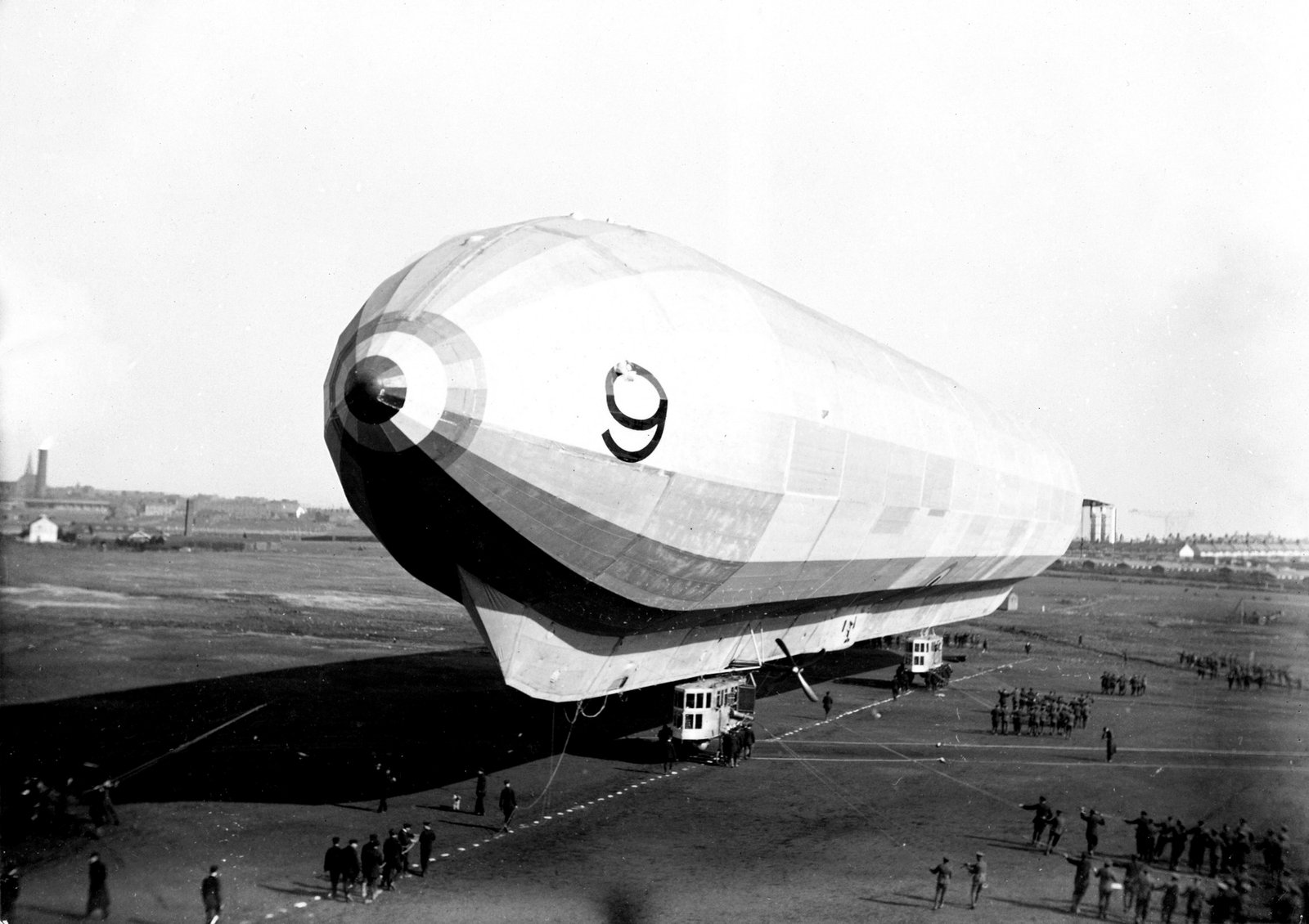
H.M.A. 9 at Barrow. Image: Brian Turpin
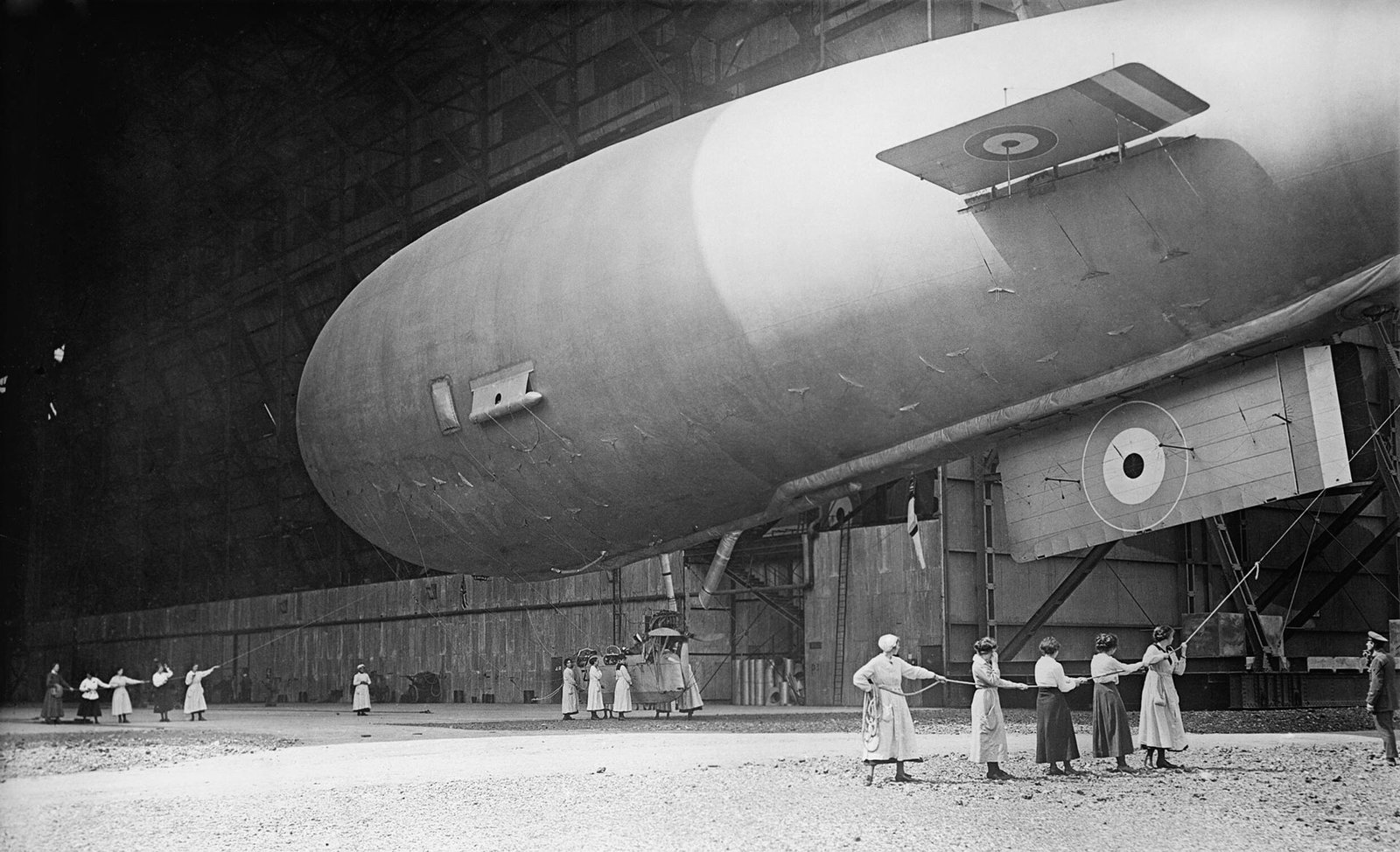
Women handling Sea Scout Zero (SSZ) airship at Howden. Image: IWM/Wikimedia Commons.
RNAS Howden
RNAS Howden became one of Britain’s most important operational airship stations during the later years of the Great War.
Opened in 1916 near the market town of Howden in Yorkshire, the station’s principal purpose was the defence of east coast shipping against German submarines. Coastal-class non-rigid airships began operating from the base in the summer of that year.
The station expanded rapidly and eventually included several enormous sheds, workshops, hydrogen plants, and accommodation blocks. Airships from Howden patrolled the Humber approaches and the North Sea convoy routes.
Howden also became significant in the development of post-war rigid airships. During the 1920s the station handled large rigid craft and served as a key RAF lighter-than-air base.
Unlike some temporary wartime stations, Howden remained active into the interwar years, symbolising Britain’s continued — though increasingly uncertain — commitment to airship technology.
Even today, traces of the airship sheds and technical infrastructure can still be detected in the Yorkshire landscape.
RAF Cranwell
RAF Cranwell became one of the most important centres of British military aviation during and after the Great War.
Originally established in 1916 as a Royal Naval Air Service training station, Cranwell’s primary wartime function focused on training pilots and aircrew for naval aviation duties. Although it became more strongly associated with fixed-wing aircraft than coastal patrol airships, the station also played a role within the broader network of RNAS aerial operations and lighter-than-air administration.
Its location in Lincolnshire provided wide open flying country well suited to aviation training and experimentation. Cranwell rapidly expanded into a major military aviation establishment with hangars, technical workshops, accommodation blocks, and instructional facilities.
Following the formation of the RAF in 1918, Cranwell gained lasting importance as an officer training centre and eventually became the home of the RAF College. In many ways, the station symbolised the transition from the improvised wartime aviation of the RNAS era to the permanent institutional structure of the Royal Air Force.
Though not a major operational airship station in the manner of Pulham or Howden, Cranwell formed part of the rapidly expanding aerial infrastructure that underpinned Britain’s wartime aviation effort. N.S.11 was based at cranwell from mid-March to the end of May 1919.
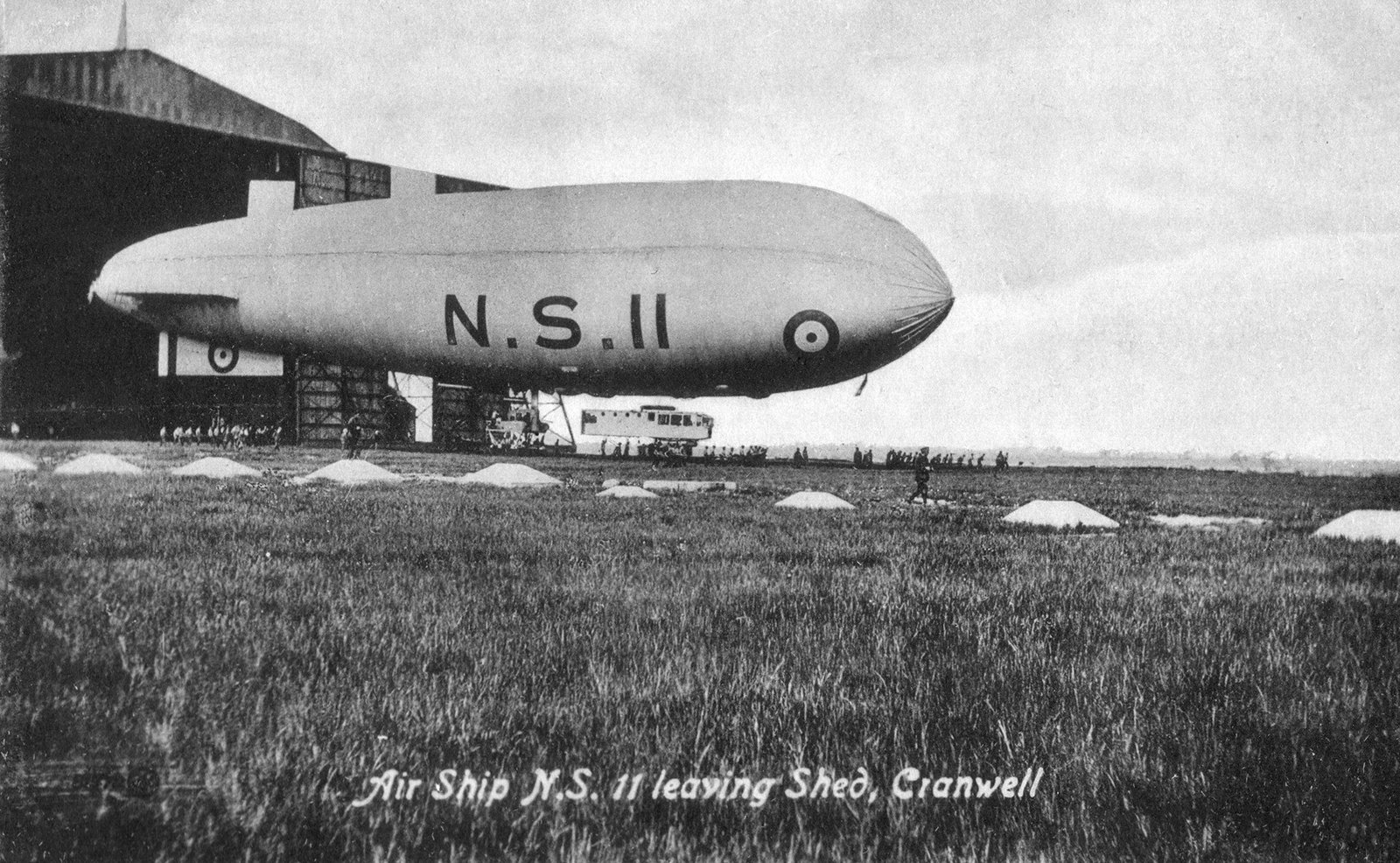
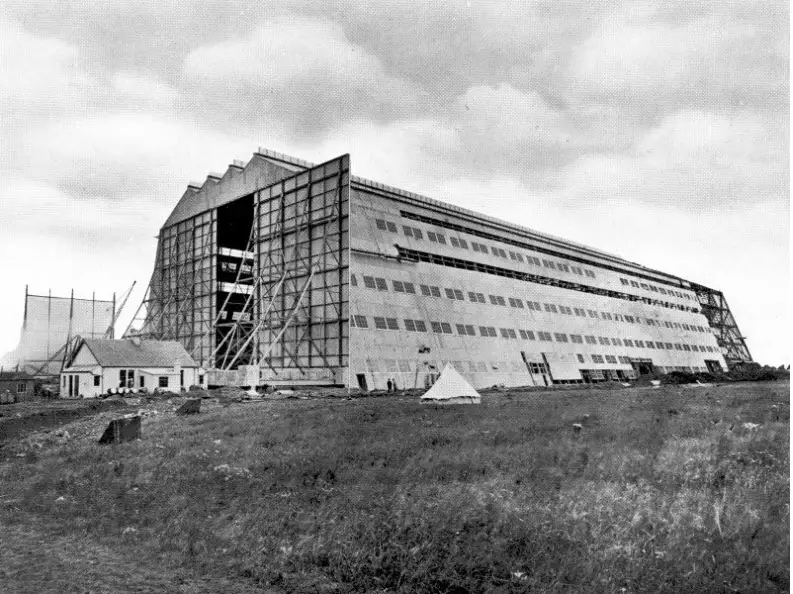
Inchinnan airship shed. Image: Airship Heritage Trust
RNAS Inchinnan
RNAS Inchinnan emerged during the later stages of the First World War as one of Britain’s most ambitious rigid airship construction and operating centres.
Located near the River Clyde west of Glasgow, the station occupied an ideal position close to Scotland’s industrial heartlands and major shipbuilding facilities. Construction began in 1918 with the intention of creating a vast rigid airship base capable of supporting Britain’s expanding lighter-than-air ambitions.
The site became famous for its colossal airship shed, among the largest structures in the world at the time. Built by Beardmore, the enormous steel-framed building reflected the growing scale of British rigid airship engineering.
Although the war ended before Inchinnan reached full operational significance, the station remained important during the interwar years. It became associated with rigid airship assembly, maintenance, and experimental development.
The scale of Inchinnan illustrated how seriously Britain briefly pursued lighter-than-air technology as both a military and imperial communications system.
Little survives today beyond fragments of infrastructure and local memory, yet the station once represented the frontier of British aeronautical engineering.
RAF Cardington
Cardington became the spiritual home of British rigid airships.
Originally established during the First World War as a construction and operational site for rigid airships, Cardington evolved into Britain’s principal centre for lighter-than-air engineering and experimentation.
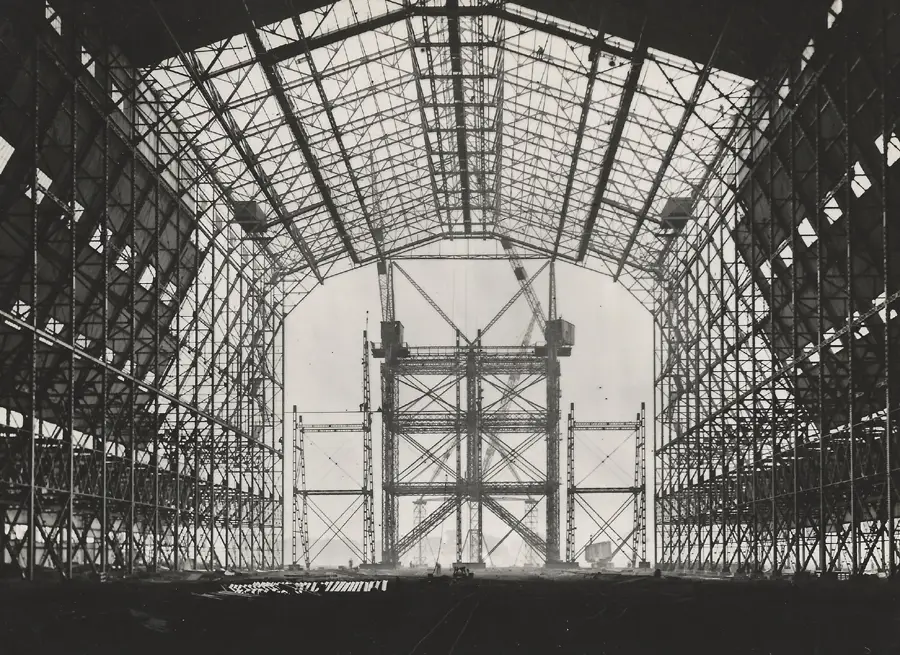
The gigantic sheds built there rank among the largest structures ever constructed in Britain. Originally intended for wartime rigid airship production, they later housed the great interwar airships R100 and R101.
Following the creation of the RAF in 1918, Cardington remained central to Britain’s airship ambitions. Engineers there pursued the vision of imperial aerial transport, imagining regular passenger and mail services linking Britain with India, Canada, and Africa.
The station represented both the pinnacle and the tragedy of British airship development. The crash of R101 in France in 1930, with heavy loss of life, effectively destroyed political confidence in the programme.
Yet Cardington endured long after the airship era ended. The famous sheds survived and later found new uses in aircraft research, film production, and aerospace testing. Few structures in Britain evoke the scale and ambition of early aviation more powerfully.
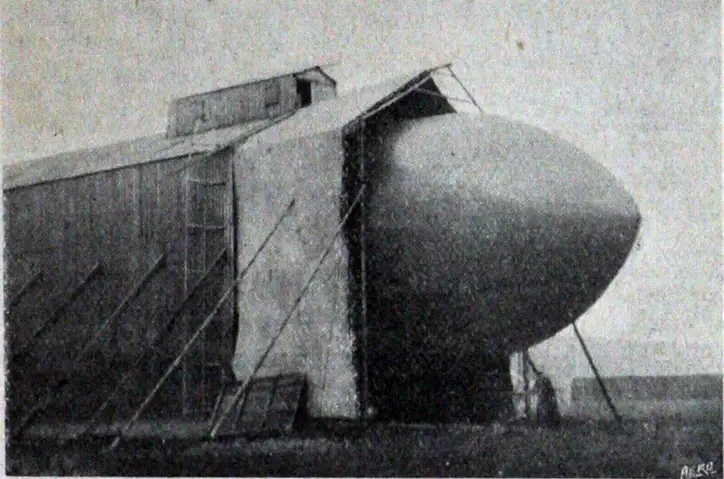
The “father of British airships”, E. T. Willows’ airship emerging from the shed at Wormwood Scrubs, 1910. Image: Airship Heritage Trust
Wormwood Scrubs Airship Station, London
Wormwood Scrubs occupies a unique place in British aviation history because it served as one of the earliest centres of military ballooning and lighter-than-air experimentation.
Before the First World War, the open land of Wormwood Scrubs in west London had already become associated with military aeronautics through the activities of the Army Balloon Factory and related experimental work.
Though never a major operational wartime airship station on the scale of Pulham or Howden, the area played an important role in the formative years of British military aviation. Early experiments with balloons, dirigibles, signalling, and aerial observation helped establish many of the techniques later developed by the Royal Naval Air Service and Royal Flying Corps.
Its proximity to London made Wormwood Scrubs valuable for demonstrations, testing, and training during the infancy of British aviation.
In many respects, Wormwood Scrubs represented the transitional world between Victorian military ballooning and the fully developed military airship stations of the Great War. It formed part of the intellectual and technological ancestry of Britain’s wartime lighter-than-air programme.
RNAS Luce Bay
RNAS Luce Bay was among the lesser-known but strategically valuable Scottish airship stations established during the First World War.
Located on sheltered ground near the head of Luce Bay in Wigtownshire, the station was developed in 1915 to protect shipping moving through the northern Irish Sea and western approaches. German submarines increasingly threatened merchant traffic travelling to and from Liverpool and the Clyde.
The site featured a large Submarine Scout-class shed capable of housing several SS-class airships, together with hydrogen storage, workshops, and administrative buildings. Its sheltered geography offered valuable protection from Atlantic winds, an important consideration for fragile non-rigid airships.
Airships operating from Luce Bay conducted anti-submarine patrols and convoy reconnaissance missions. Though comparatively small when measured against stations such as Pulham or Kingsnorth, Luce Bay formed part of the extensive defensive network that ringed Britain’s coastline during the U-boat campaign.
Today almost nothing survives above ground, but the site remains an evocative reminder of the temporary wartime infrastructure that once transformed remote coastal landscapes into centres of aerial naval defence.
RNAS Polegate, East Sussex
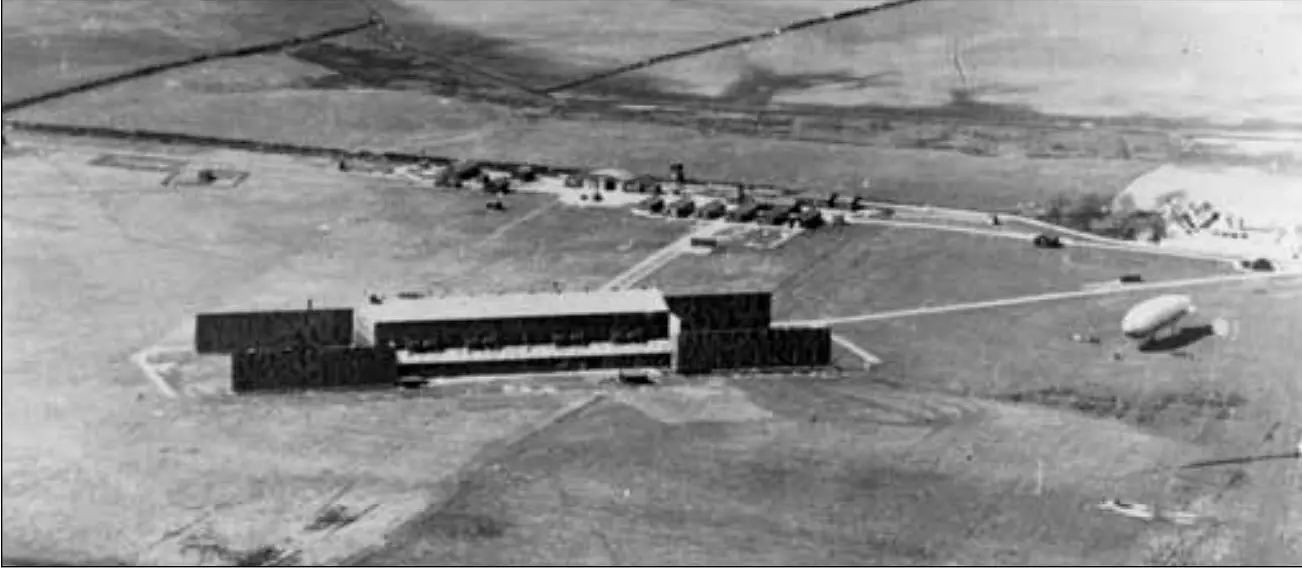
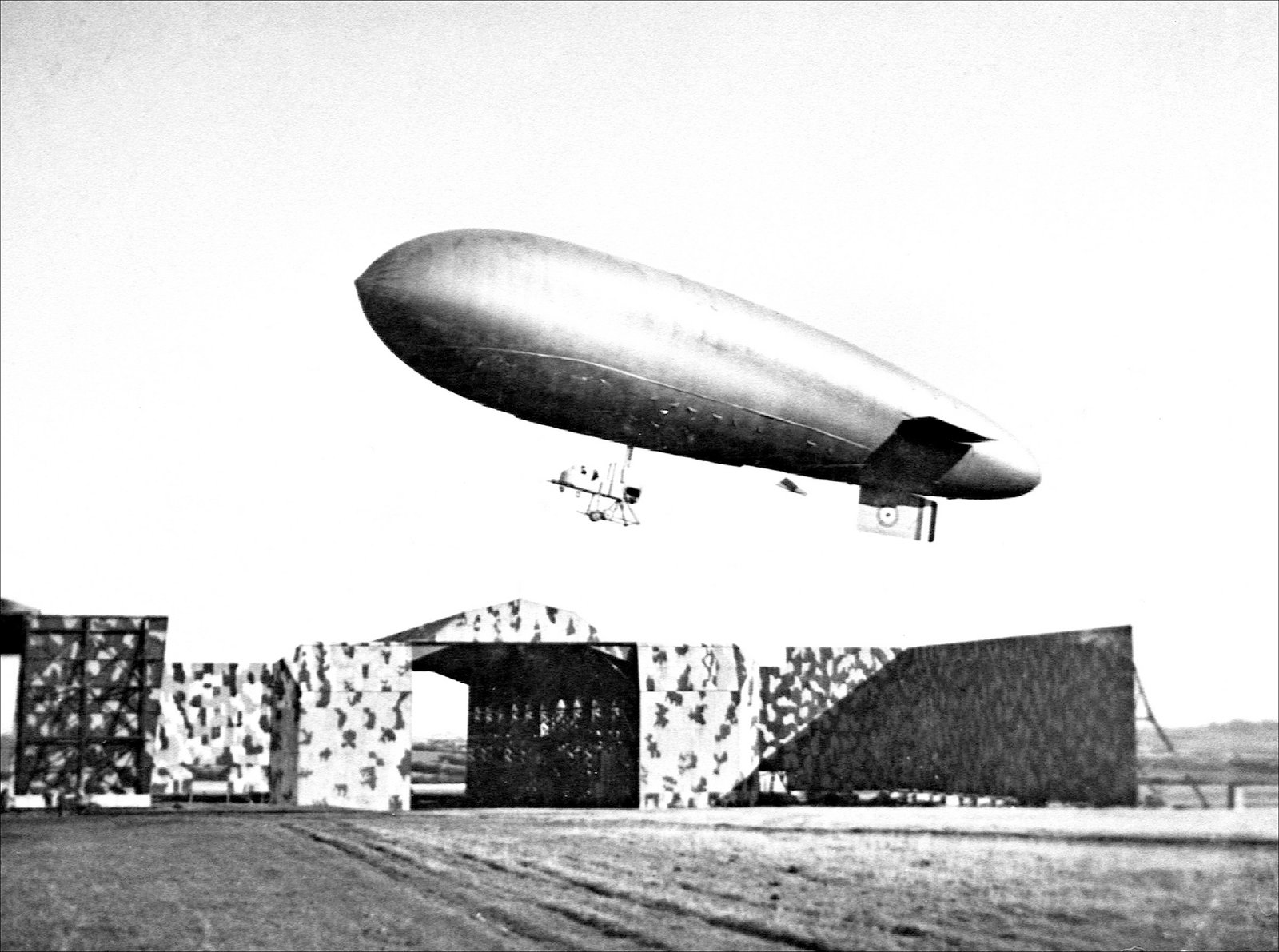
Near Eastbourne, the Polegate airship station occupied low marshy ground sheltered by the South Downs.
The station formed part of the south coast defensive system and carried out patrols over the Channel approaches. Its sheds and infrastructure transformed quiet agricultural land into a highly modern military installation.
The contrast between rural England and giant military airships became a recurring feature of wartime Britain. Villagers who had never seen powered flight suddenly witnessed enormous silver airships emerging from hangars and drifting over the countryside.
Polegate symbolised the rapid militarisation of the landscape during the war.
RNAS Anglesey (RAF Mona)
RAF Mona began life during the Great War as RNAS Anglesey, one of the principal airship stations defending Britain’s western sea approaches.
Established in 1915, the station’s primary responsibility involved anti-submarine patrols over the Irish Sea and the convoy routes leading toward Liverpool and the Mersey estuary.
The station operated SS-class and SSP-class non-rigid airships from a large airship shed erected on the exposed landscape of Anglesey. Supporting facilities included hydrogen production buildings, repair workshops, wireless installations, and crew accommodation.
Airships from Anglesey escorted merchant convoys, searched for German submarines, and monitored maritime traffic moving between Britain and Ireland.
The station later passed into RAF control after 1918 and remained associated with military aviation long after the airship era ended. Its wartime role formed part of the wider defensive aerial barrier that encircled Britain during the submarine campaign.
RNAS Pembroke (Milton)
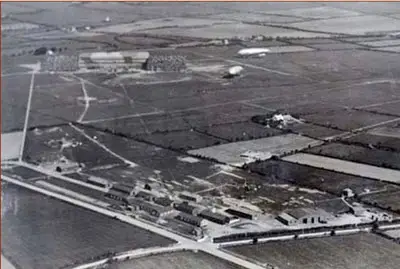
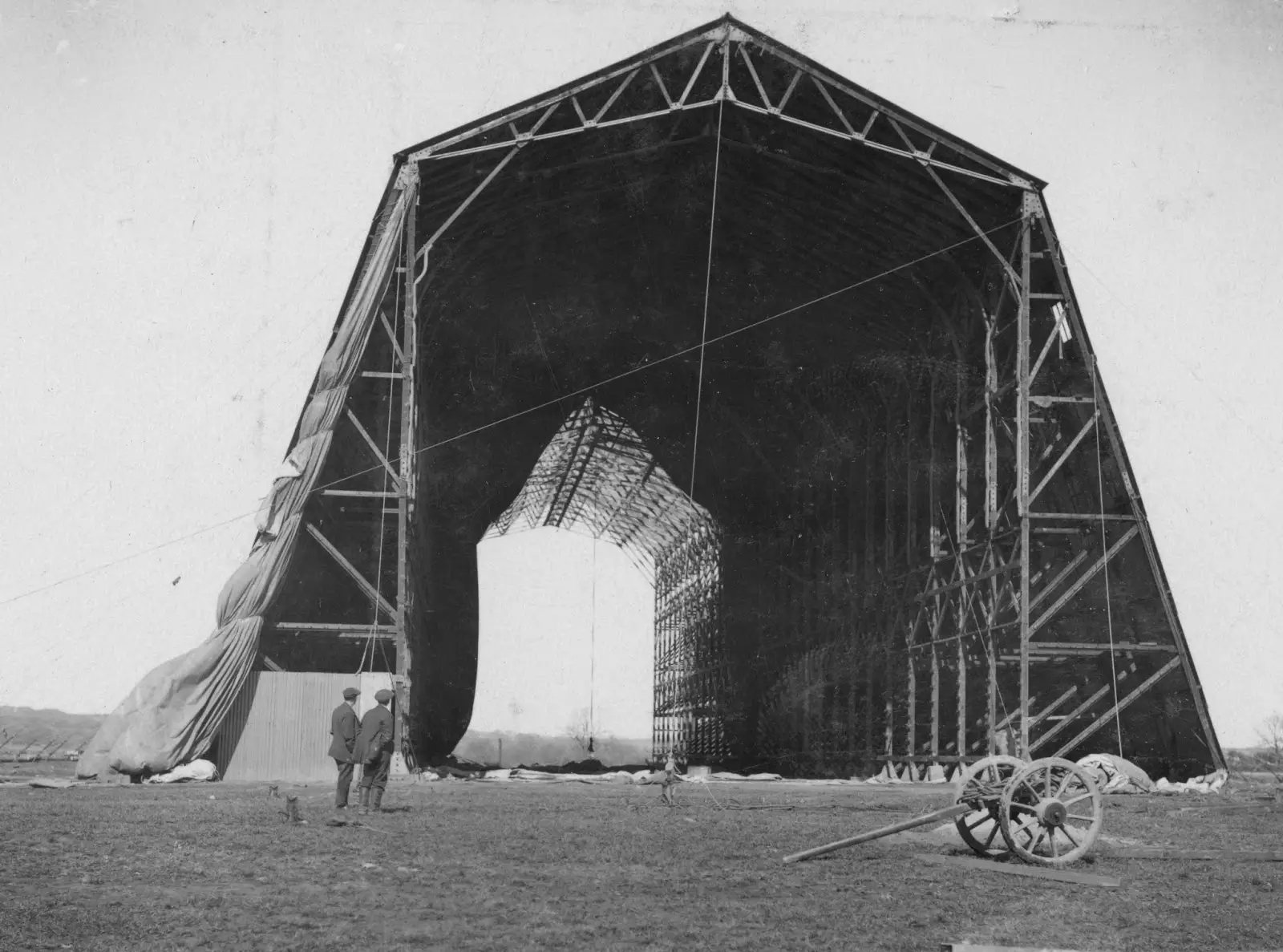
RNAS Pembroke became one of the most important Welsh airship stations of the First World War.
Established near Milton in 1915, the station guarded the Western Approaches, Bristol Channel, and Irish Sea against the growing German submarine threat.\n\nLarge non-rigid airships based at Pembroke carried out long coastal patrols searching for U-boats and escorting merchant shipping. The station operated several classes of British patrol airship, including the SS and Coastal classes.
Two immense corrugated airship sheds dominated the local landscape, accompanied by hydrogen storage facilities, engineering workshops, barracks, and wireless stations.
Pembroke demonstrated the increasing sophistication of Britain’s maritime aerial defence system during the later stages of the war. By combining airships, fixed-wing aircraft, naval intelligence, and convoy organisation, stations such as Pembroke helped reduce the effectiveness of German submarine attacks.
Although military activity declined after 1918, the station represented a major chapter in the development of naval aviation in Wales.
RNAS Mullion
RNAS Mullion stood on the rugged Lizard Peninsula in Cornwall, one of the most strategically important maritime regions in Britain.
Commissioned in 1916, the station occupied high coastal ground overlooking the western entrance to the English Channel. Its position allowed airship patrols to monitor shipping routes vulnerable to German submarine attack.
Mullion operated non-rigid SS-class and Coastal-class airships engaged in convoy escort, anti-submarine reconnaissance, and coastal patrol duties.
The station’s exposed Atlantic location created difficult operating conditions. Strong winds and rapidly changing weather frequently complicated airship handling, requiring highly skilled ground crews and careful operational planning.
Mullion formed part of the defensive chain protecting Britain’s southwestern approaches and the shipping routes linking the Atlantic with the Channel ports.
Though the station disappeared after the war, the dramatic Cornish landscape still evokes something of the isolation and danger faced by wartime airship crews.
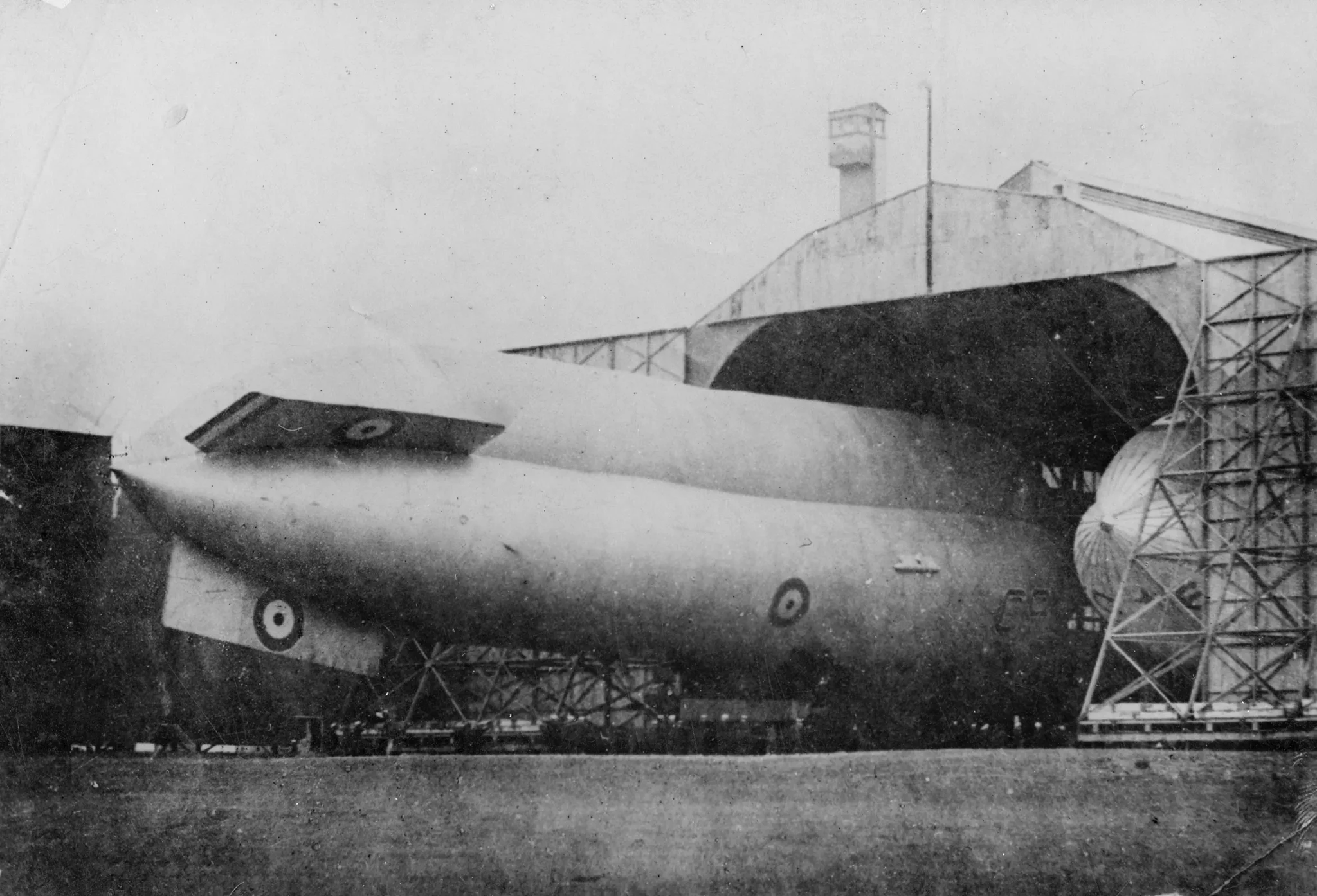
Coastal class ship emerging from Mullion shed with second (C.16) in the shed. Image: Airship Heritage Trust